Solar Batteries for
Emergency Backup
Solar batteries can be an excellent option if you want backup power to run several appliances at the same time in your home for several days. While a solar battery doesn’t provide unlimited power, it is a great way to live comfortably during a power outage lasting several days or even weeks. In this article, I’ll explain what equipment you need and whether you can recharge your solar system during a power outage. I’ll also explain where solar batteries fall short and if a different option might be better for you.
By the way, I didn’t invest in a solar battery, although I do have a power station. My husband Rick and I love to camp, so we invested in a power station for its ease of use and convenience, but I am considering buying a solar battery for our home.
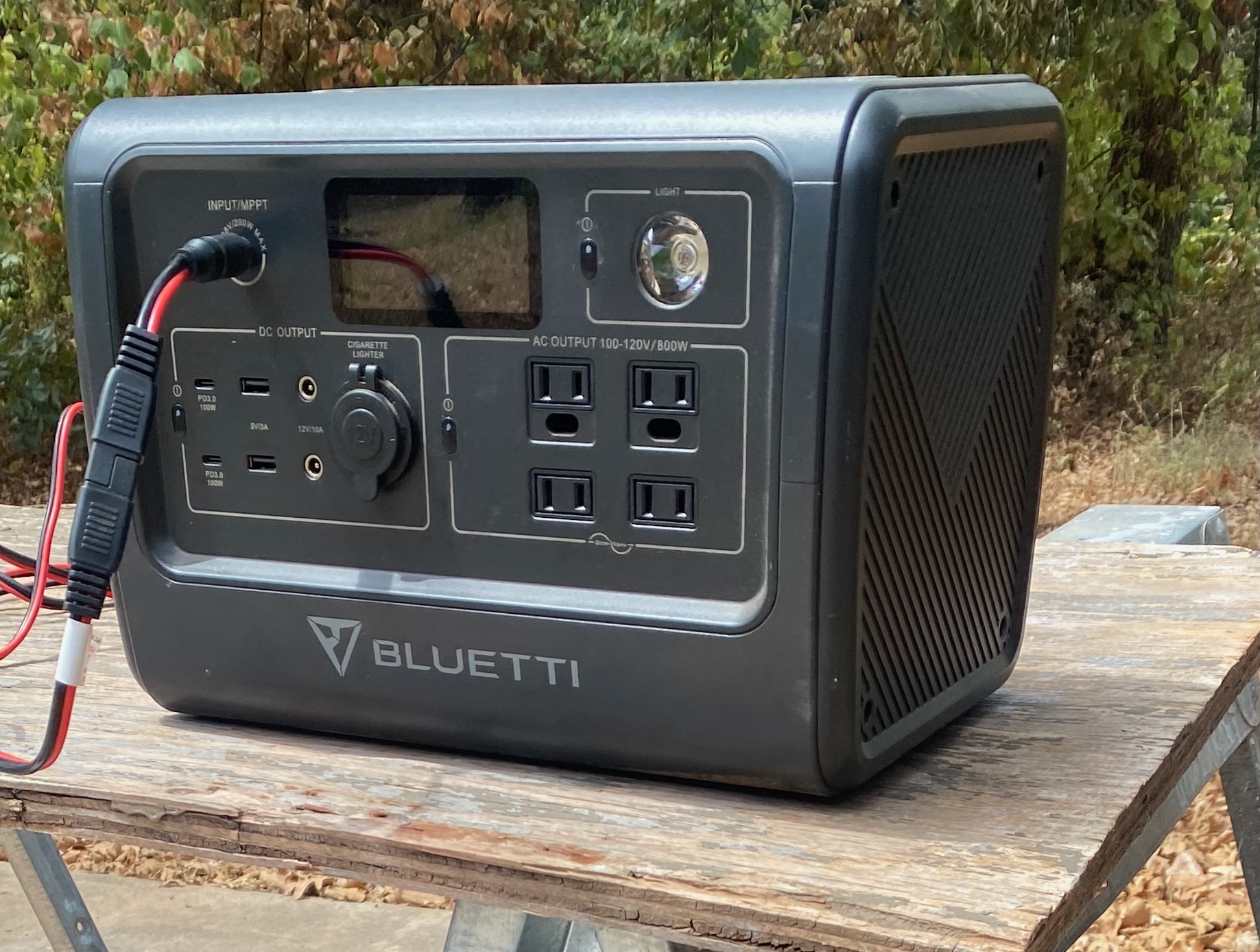
So what’s the difference? A power station - like ours pictured on the right - doesn’t store as many amp-hours as a solar battery might. A power station is a solar battery, inverter, and charge controller all wrapped up in one. And while it’s convenient and easier to use than a solar battery, it also doesn’t have as much power. Ideally, you can run up to four appliances on my power station, but they won’t run as long as they would on a solar battery.
Where Solar Batteries Help You Most
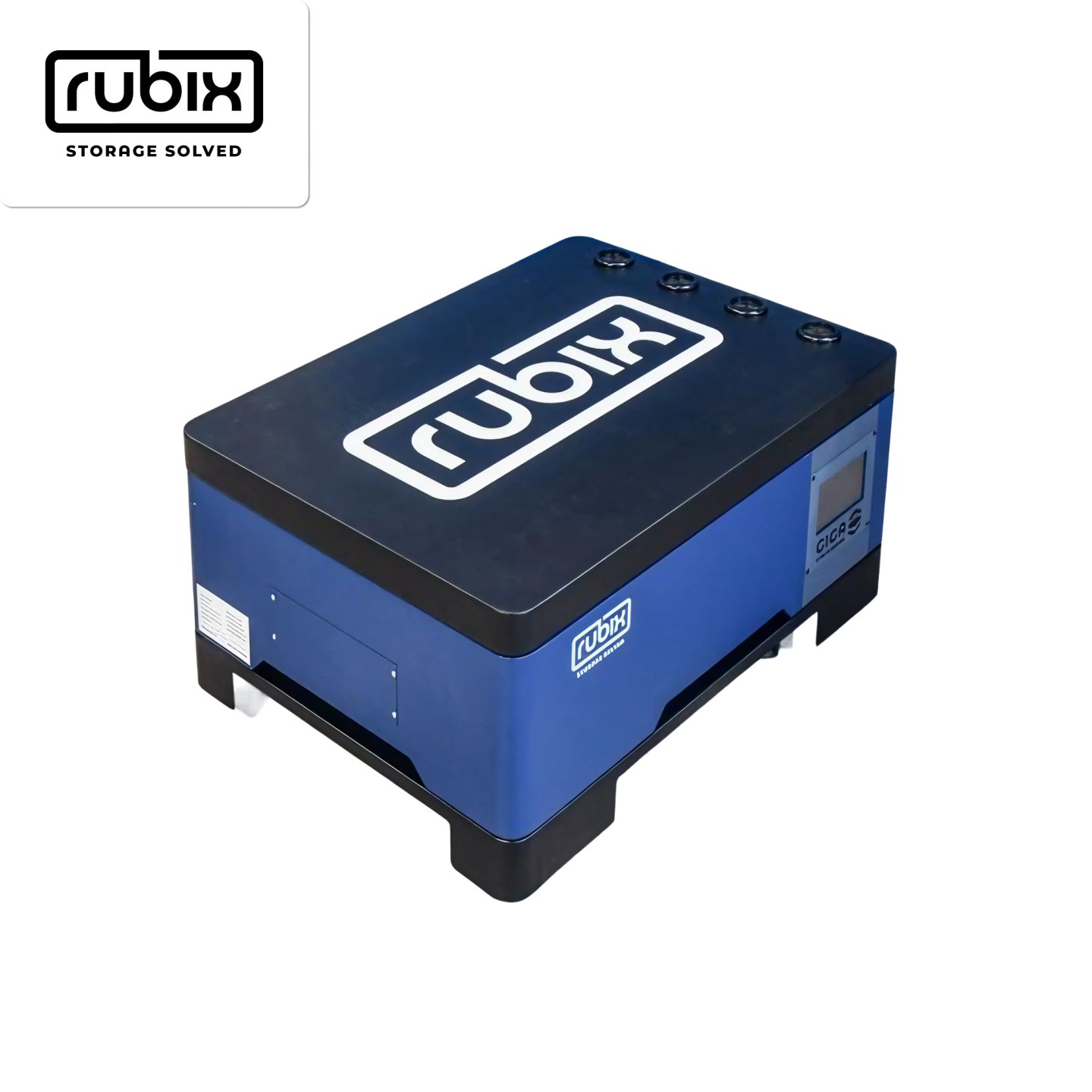
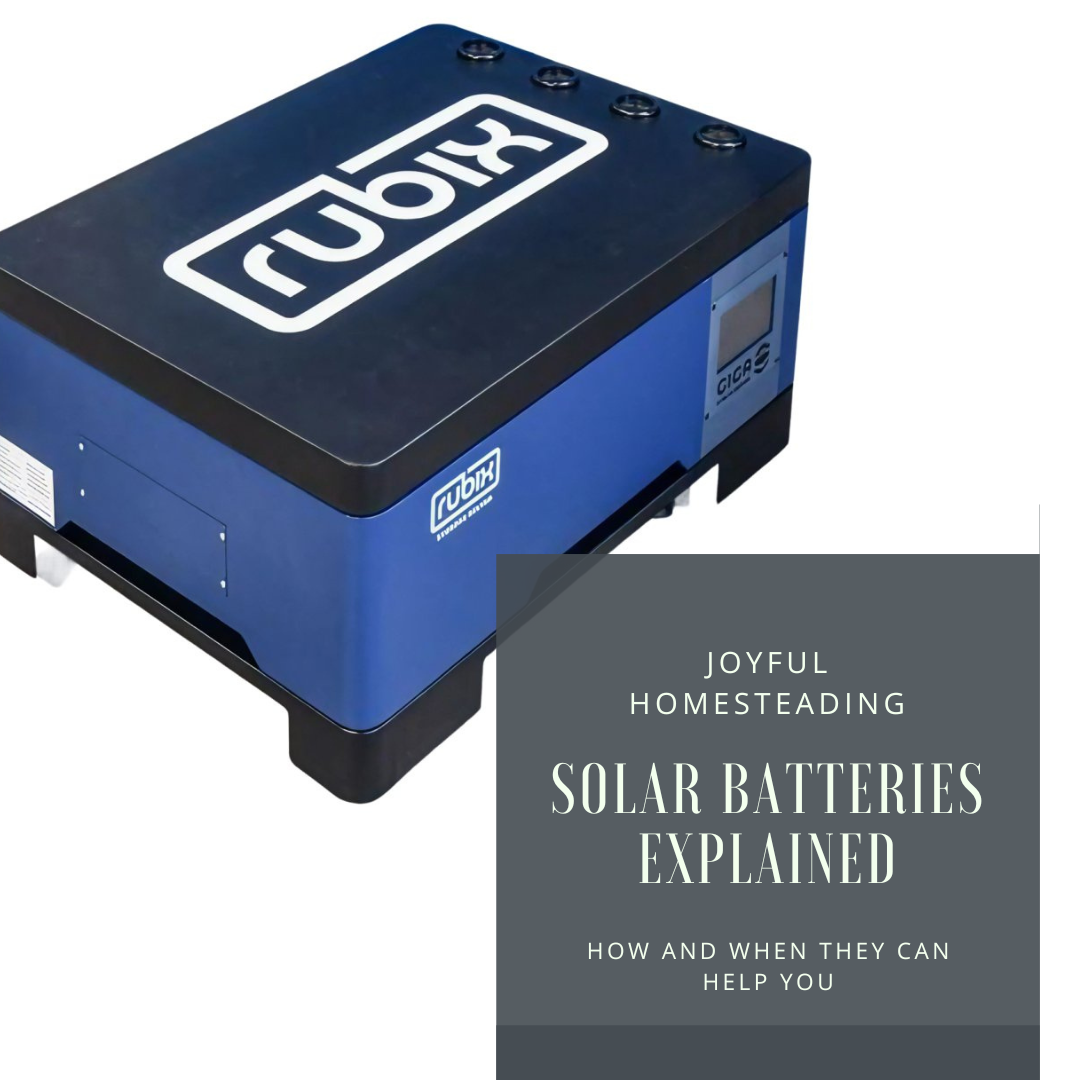
A solar battery, like the one pictured on the left, stores 3.5kWh, meaning 3.5 kilowatt-hours. The total power you can use from this battery will depend on the inverter you use and the appliances you want to run.
For example, a battery like that can run a refrigerator for 20 to 35 hours. You could probably run your refrigerator, lights, and charge your iPad, phone, and other items on such a battery easily.
Here's a comparison between solar batteries and a power station, such as the one Rick and I bought:
Solar Batteries
|
Power Stations
|
What Solar Batteries Can't Handle Alone
Unless you have a lot of solar batteries and a very efficient air conditioning unit, a solar battery won’t be enough to run an HVAC system (it will drain the battery in an hour). It also won’t be able to run your electric water heater. These appliances suck up more power than your solar batteries can typically store.
If you want to go completely off the grid, then you will likely need several solar batteries and several solar panels, and you will need to live in an area where you get sufficient sun - typically in the southern portion of the United States.
How to Tell If a Solar Battery
Fits Your Backup Needs
You will need to determine how much backup power you need. Related article: How much backup power do I need?
Most people want to be able to run their refrigerator during a power outage so their food doesn't spoil. They also want to run lights and television to keep from going crazy from boredom, and charge their devices, such as an iPad, computer, or phone.
How Much Power Do I Need To Run a Fridge?
You can determine how much energy your refrigerator needs by checking the voltage and amperage sticker inside the fridge's door frame. Depending on its size, a refrigerator will need between 200 and 800 watts of electricity per hour. These are the ranges, according to A1 Solar Store:
- Compact Refrigerators (under 10 cubic feet) - 200 - 400 watts
- Standard Top-Freezer Models (14-18 cubic feet) - 300 - 500 watts
- Side-By-Side Refrigerators (20-25 cubic feet) - 400 - 700 watts
- French Door Models (22-28 cubic feet) - 500 - 800 watts
- Large Capacity Units (over 28 cubic feet) - 600 - 800 watts
- Mini Fridge - 50 - 100 watts
Without a solar battery, you will need between one and four solar panels to run your refrigerator. but having a battery to store that power makes all the difference. As long as the sun is shining, the solar panels will create energy that will be stored in your solar battery. Even on cloudy days, the solar panel is able to generate electricity, although obviously not as much.
Related article: Read these facts about solar panels.
Most solar batteries have enough power to run your fridge for two to three days. Because your refrigerator draws a low amount of power, it's easy to keep it running during a power failure along with running a few lights, your WI-FI system and charge your devices.
What About Other Appliances?
You can run an LED light bulb for more than 300 hours at only 10 watts per hour. You can run a laptop for more than 50 hours and an LED television for more than 30 hours.
On the other hand, a coffee maker and microwave will drain your solar batteries pretty quickly. A coffee maker uses 1000 watts per hour, and a microwave drains between 1200 and 1500 watts per hour. Consider investing in a camp stove and brew your coffee the old-fashioned way in an emergency.
When Should I Consider Another
Option for Backup Power?
If you live in an area that doesn't get much sun, a solar backup power system likely isn't right for you. You are better off investing in either a gas-powered generator or a portable propane generator.
How Much Backup Power Do I Need?
About the Author
My name is Sue Merriam, and I began the journey of self-reliant living more than three decades ago, which enabled me to stay home with my children. Fifteen years ago, I founded Joyful Homesteading to help others save money and face the future without fear. My goal is to give you practical, honest advice so you can save money and experience the joy of simple living. I hope you join me.
Recent Articles


-
Benefits to Organic Gardening
Sep 21, 26 03:37 PM
 Benefits to organic gardening include the best, fresh delicious harvests.
 -
Homesteading Legal Restrictions in HOA Communities
Aug 31, 26 05:48 PM
 Homesteading legal restrictions in HOA communities is possible, but check with your HOA and local laws.
 -
Solar Batteries for Emergency Backup During Outages at Home
Aug 19, 26 12:23 PM
 Learn what solar batteries can realistically power in an outage, how long they last, and what works best for you.