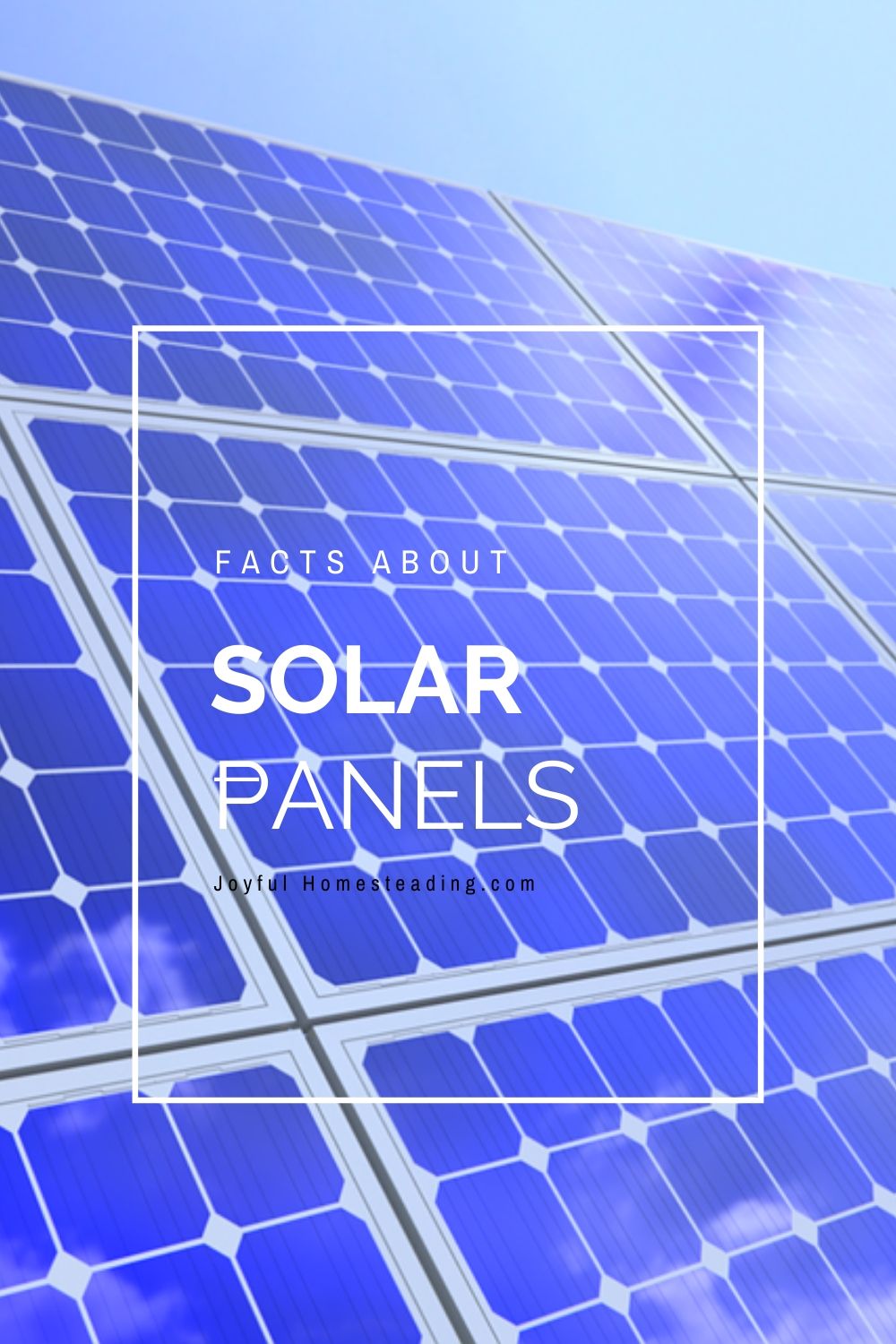
Facts About Solar Panels
Facts about solar panels are good to know when considering solar power, either for a solar-powered generator or going completely off the grid. Here are some facts about these amazing panels, some myths about them, and some facts about solar energy.
Ten Facts About Solar Panels
1. Solar Panels Are Cheaper Than You Think
You can buy a good-quality solar panel that produces 400 watts of electricity an hour for about $150. While they aren't cheap, they are more affordable than ever.
However, if you plan on powering your entire home with solar panels, it will still be costly. Before rebates and credits, the cost of purchasing solar panels to power a home can be at least $30,000 or more. And it may take more than 20 years before it pays for itself. Think of it as a long-term investment.
2. Solar Panels Are a One-Time Investment
Once you pay for the panels themselves and the installation, you don’t have any more bills. Ever.
3. Solar Panels Could End Up Paying You
If you invest in solar panels for your home, and those panels produce more electricity than you use, you can sell that power to the utility company, and it will pay you a rebate. Mind you, it won't be a huge amount, but over a couple of decades, it could be enough for you to recover your investment.
4. Scientists Invented the First Solar Cell in 1876
Albert Einstein explained how light can be converted into electricity in 1905. It's not a useful fact from a self-reliance standpoint, but it's still pretty cool.
5. Solar Panels Don't Harm the Environment
There’s no danger of oil spills with solar panels nor any risk of a nuclear meltdown. Conventional power produces more than three tons of carbon emissions a year. Not so with solar panels. They don't produce any smog ever.
6. Solar Panels Are Your Cheapest Power Source
If you Choose To Live Off Grid
If you live in remote areas, sometimes solar power may be your only choice, but it’s an efficient one.
7. Solar Panels Use Silicon, an Abundant Natural Resource
Silicon comes from Earth’s crust and has semi-conductive properties. When light hits silicon, the electrons in the cells try moving to the negative side. Add a wire to the mix, and you get an electrical circuit and a way to harness that electricity.
8. Solar Panels Produce Direct Current
In order to use that power to run devices in your home, you need to convert that electricity into alternating current using either an inverter or a power bank.
9. Hiring Someone To Install Your Panels Can Cost You
Expect the cost of labor to be about 15 percent of the total cost.
10. NASA Scientists Realized the Power of the Sun
Another useless, yet cool fact. NASA scientists eventually used solar panels to power the space station.
Talk about generators, and most people think of the kind that runs off of gasoline or propane. While both are powerful, they are also noisy, and when you run out of fuel, you run out of power. But the sun will always be there, meaning if you can get solar panels up on your roof, you will have power so long as you have sunny days.
So How Does It Work?
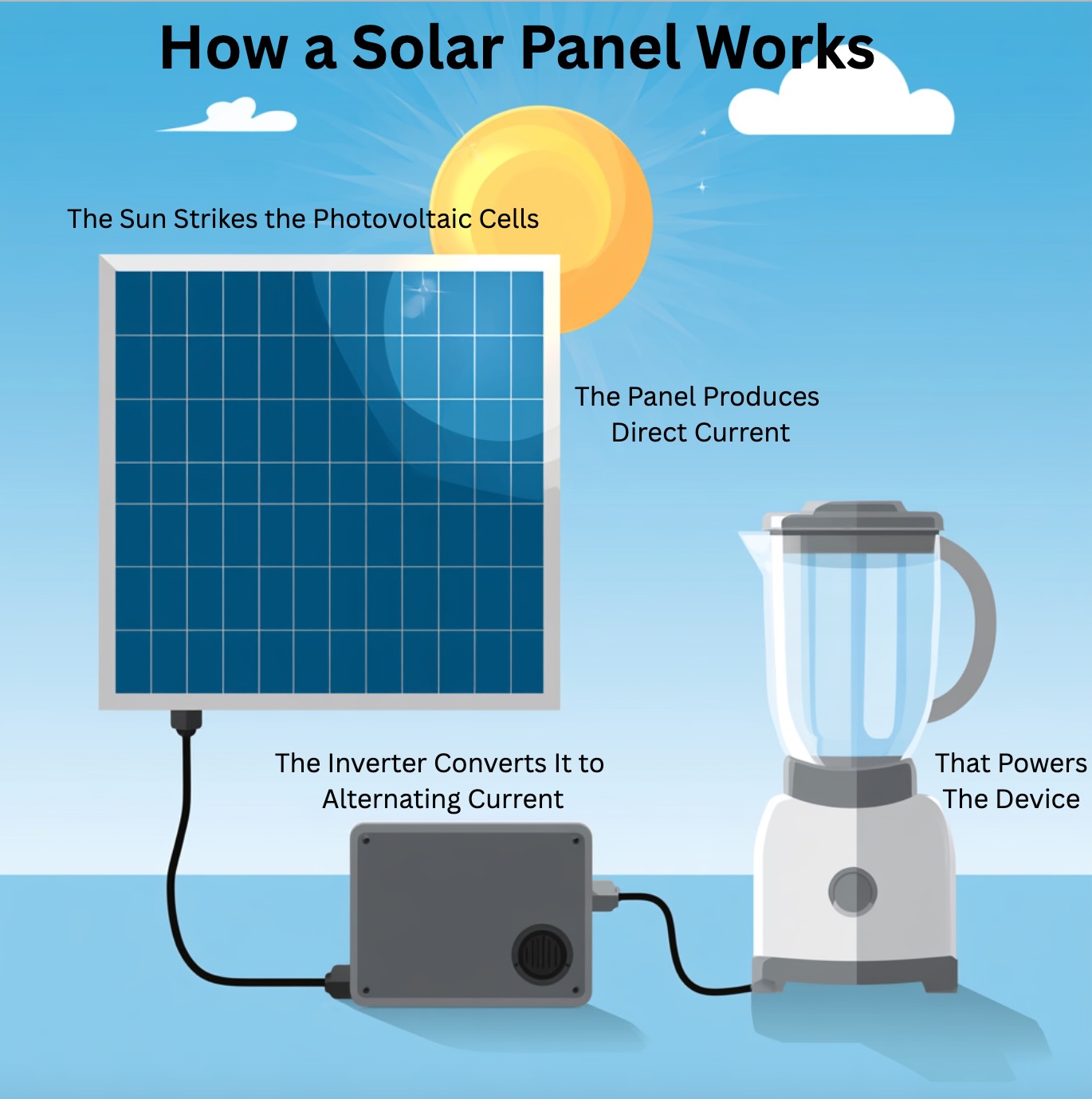
The sun strikes the photovoltaic cells, which contain silicon. The light causes electrons in the silicon to move about, creating electricity. Wires surrounding the silicon cells capture the electricity and produce a direct current. That current can be sent via a wire to either an inverter or a power station, which converts the electricity from direct current to an alternating current.
Why is this important? Because all appliances in the United States run on alternating current, and direct current will fry your devices.
In addition to cool facts about solar panels, there are some myths as well. Here are a few:
Myth #1 - Solar Panels Only Work on Sunny Days
Solar panels work on cloudy days as well, just not as efficiently. It may take longer for your battery to charge on cloudy days, but solar panels still produce electricity.
Myth #2 - Solar Panels Are Too Expensive
Solar panels are becoming more affordable every day, especially if you want something as a backup power source.
Related article: How Much Backup Power Do I Need?
Myth #3 - A Generator Is A Cheaper Backup Power
Not necessarily. A solar panel and a power station could cost more, or they could cost about the same as a generator, depending on what you invest in. And a solar panel and power station will never need fuel.
Myth #4 - Solar Panels Are Too Complicated
A solar panel system can be as simple as buying a solar panel and then buying a power station. Plug the solar panel into the power station and make sure the solar panel is facing the sun. It will charge your power station in a few hours. Simple.
Why Solar Panels Are Important
For Self Reliance
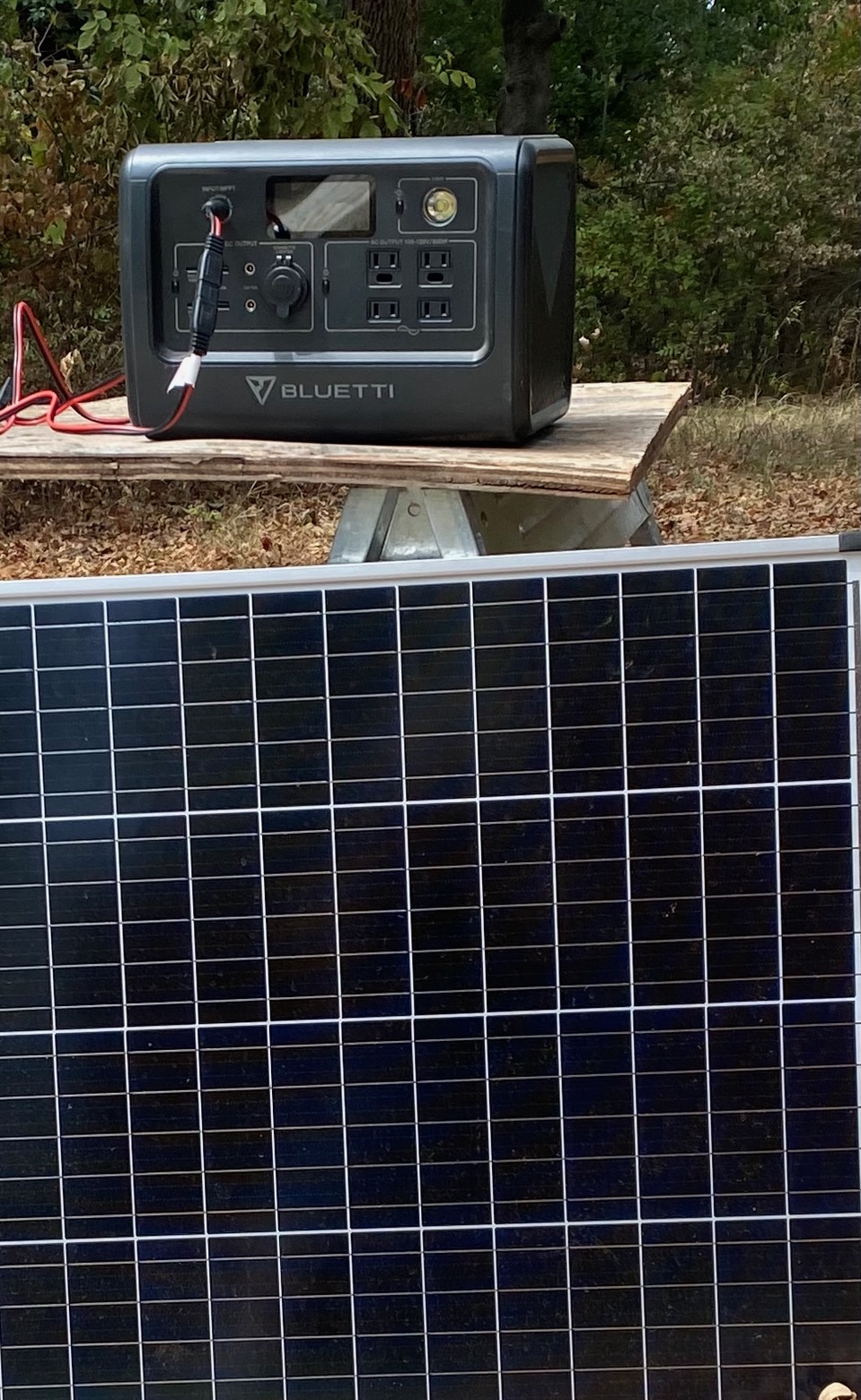
Even if you don't have an off-grid system, having some solar panels means you will have power in an emergency.
Joyful self-reliance means being prepared without being afraid. We should all be realistic about potential threats of losing power. An ice storm could hit, and power lines could go down, sometimes for a week or more. It's a smart idea to invest in equipment that gives you peace of mind, no matter what you might face in the future.
In the past, a homeowner couldn't think of going off the grid without investing thousands of dollars upfront, leaving solar energy to the realm of movie stars and the very wealthy.
Fortunately, things have changed for the better.
Facts About Solar Panels and
the Equipment You Need
A solar panel harnesses energy from the sun, but you need to harness that energy from the solar panel as well. Here are some of the other pieces of equipment you need to get electricity from the solar panel and into your home.
- Charge Controller - This makes sure the charge going from the solar panel is at a low enough voltage for your battery to handle.
- Battery - This stores the electricity from the solar panel until you are ready to use it. You will need to use a marine deep cycle battery rather than an ordinary car battery as it will last far longer.
- Inverter - the power coming from your battery will be a direct current, but most of your appliances will run on alternating current. The inverter changes the direct current into alternating current.
- Proper Wiring - The wire you use should be large enough to accommodate the current running from the solar panel to your charge controller, battery and inverter. A 14 gauge wire or larger will ensure your wires don't overheat and cause a potential fire.
Facts About Solar Panels and
Finding Your Equipment
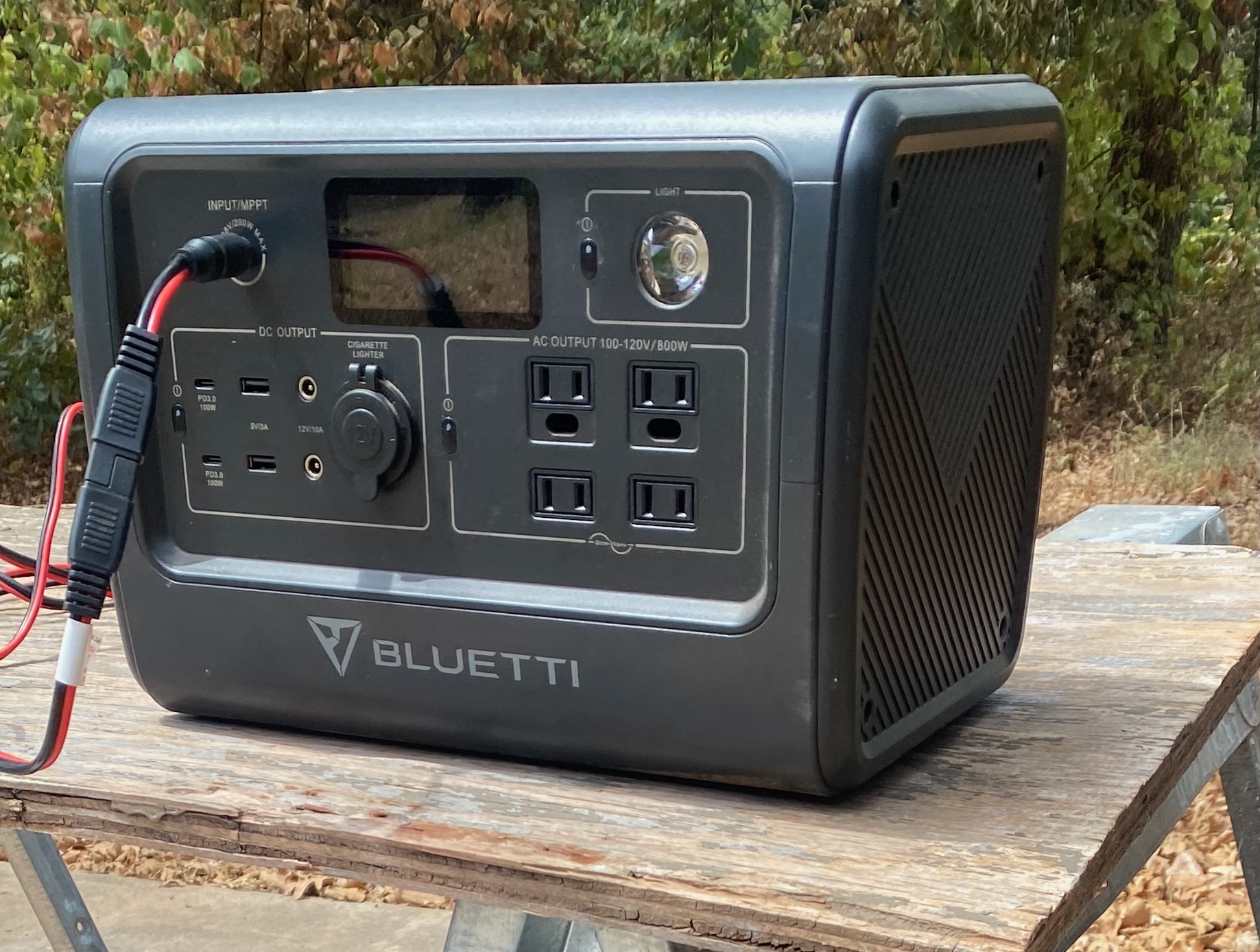
Now that you know the equipment you need to harness energy from the sun, you are likely wondering where you can find these pieces of equipment. Fortunately, you can make a solar powered generator for $300 or less (you can learn more here). Here are some tips on where to find the equipment you need.
Finding a Solar Panel
One of the crucial facts about solar panels is you need a solar panel for it all to work. Solar panels will produce different amounts of watts depending on the number of silicon cells it has. Generally, the more wattage it can produce, the more expensive the solar panel will be.
You can find solar panels for sale on eBay, and also on Amazon (find the solar panels here).
Finding a Charge Controller and Inverter
Charge controllers are available in all price ranges and capacities, as are inverters. You can purchase both of these items from Wal Mart, Amazon or eBay.
And finally, here are some interesting facts about solar energy:
Facts About Solar Energy
1. Every day, the sun provides enough solar energy to power everything on Earth for a year. We haven’t figured out yet how to harness that energy, but we’re getting there.
2. Solar energy is cost-effective and efficient. You can make solar hot water heaters, solar cookers and solar hot air collectors using standard building materials.
3. Solar panels are way cheaper than most people think. There was a time when solar panels were expensive, but no more. Solar panels these days run about $150 in today’s money.
4. Solar energy can sometimes be cheaper than power you get from the utility companies. Once you make that one-time investment in solar panels and the cost to mount them, you make back your money in lower energy costs, tax credits, and rebates. Plus, you tend to generate more electricity than you can use, leading to a rebate - where the energy company pays you.
5. People have been using solar energy for more than 2,000 years. People from Roman, Chinese and Greek cultures used the sun to start fires. They also built structures to use the sun for heating.
6. Unlike fossil fuels, we will never run out of solar energy. According to scientists, the sun has an estimated lifespan of about 10 billion years. As far as solar energy goes, we’re good.
Frequently Asked Questions
How Long Will My Solar Panel Last?
A good-quality solar panel will last at least twenty years or more.
Do I Need a Power Station?
The answer is yes if you plan on storing the power your solar panels produce. And that’s one of the benefits of having a solar power system: having electricity when the power grid is down. A good power station can be expensive, but it is well worth the investment for peace of mind.
Will My Solar Panels Work at Night?
Solar panels will only work when there is sunlight.
Learn More About Going Off the Grid
Return from Facts About Solar Panels to the Home Page
About the Author
My name is Sue Merriam, and I began the journey of self-reliant living more than three decades ago, which enabled me to stay home with my children. Fifteen years ago, I founded Joyful Homesteading to help others save money and face the future without fear. My goal is to give you practical, honest advice so you can save money and experience the joy of simple living. I hope you join me.
Recent Articles


-
Homesteading Legal Restrictions in HOA Communities
Aug 31, 26 05:48 PM
 Homesteading legal restrictions in HOA communities is possible, but check with your HOA and local laws.
 -
Solar Batteries for Emergency Backup During Outages at Home
Aug 19, 26 12:23 PM
 Learn what solar batteries can realistically power in an outage, how long they last, and what works best for you.
 -
Facts About Solar Panels
Aug 15, 26 10:30 PM
 Facts about solar panels are good to know when considering solar power for your off the grid homestead.