Beekeeping Guide on How to Stop Killer Bees
A beekeeping guide to stop killer bees might surprise you. It doesn't mean eliminating bees altogether, as some may think, but instead by cultivating the good bees.
What Are Killer Bees?
Killer bees, or Africanized bees, are the evil twin in the bee family. While they share a lot in common with European Honey Bees, they have some distinct physical differences. They got the name Killer Bees because of their aggressive nature. They are more likely to attack than the gentle European Honey Bees.
They were introduced into Brazil in the 1950’s, and since then, Killer Bees have killed more than 1,000 humans. They are far more sensitive to disturbances than European Honey Bees, and if you make them mad, they’ll chase you more than one quarter of a mile. Since the 1990’s, they have appeared in Texas, Arizona, California and other parts of the Southern United States.
An Alarming Trend
People have become alarmed in recent years about Africanized honey bees. The temptation is to stop killer bees by passing ordinances prohibiting beekeeping in urban areas. But that would be quite a bit like throwing out the baby with the bathwater. Hence this beekeeping guide.
How it Began
Africanized honey bees, or "killer bees," got their start when biologist Warwick E. Kerr was trying to breed honey bees from Europe with bees from southern Africa to produce a strain that would be more productive in tropical climates. Twenty-six Tanzanian queen bees were accidentally released in Brazil.
Those queens mated with local drones, and an aggressive strain was unleashed in South America. The strain has now spread throughout the Americas and is now in the southern parts of the United States, bringing about a beekeeping movement to produce more gentle, productive bees and stop killer bees before they take over the country.
The Problem With Killer Bees
Apart from their aggressive nature, Killer bees are also wreaking havoc on the honey industry. When Killer bees breed with European honey bees, their pollination isn’t as consistent. Killer bees are also more likely to abandon their nests and die in the winter cold. Also, being attacked by angry bees is enough to make many beekeepers give up keeping bees, which means a lower chance of survival for all bee-kind.
Our Beekeeping Guide includes The Crucial Honey Bee
Bees are a crucial part of a healthy environment and play a vital role in a successful homestead.
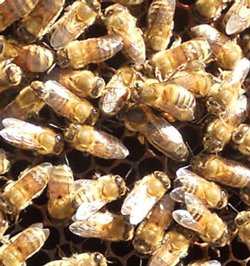
They pollinate flowers, fruits and vegetables and make everything more productive. And, of course, they produce honey.
But bees got a bad rap when the Africanized honey bees - a hybrid of the African honey bee and various European honey bees came about.
In Reality
Actually Africanized honey bees aren't more venomous than regular bees - they just have a bad temper (they also aren't any more productive, by the way.) They're extremely defensive and aggressive, more likely to swarm, and can attack without much provocation. Just the sound of a lawn mower can trigger an attack.
It is the fact that they attack in such huge numbers that makes them so
dangerous and also makes people want to stop killer bees.
But the best way to eliminating the bad bees is producing far more good bees.
What Authorities Are Doing
Authorities in the beekeeping industry have come up with two solutions to confront the killer bee problem. Their first approach is to flood an area with European drones. They do that by keeping large number of European Honey Bee colonies in the area, limiting the chance for Africanized bees to mate.
Their second approach is to frequently requeening the colony to ensure that the queens are European honey bee queens. That way only European queens and drones mate.
What You Can Do
You can help by keeping European bees and caring for them in your backyard. I can't emphasize it enough. More domestic beekeeping is crucial to stopping the increase of Africanized bees.
Join a beekeeper's association or, better still, take a course on beekeeping.
The trained homestead beekeeper can cull the queens of the aggressive strains while breeding gentler stock.
That way, you're not only pursuing homestead self-reliance, you're also serving the good of man. What could be better? You won't regret it.
Return from Beekeeping Guide to the Home Page
About the Author
My name is Sue Merriam, and I began the journey of self-reliant living more than three decades ago, which enabled me to stay home with my children. Fifteen years ago, I founded Joyful Homesteading to help others save money and face the future without fear. My goal is to give you practical, honest advice so you can save money and experience the joy of simple living. I hope you join me.
Recent Articles


-
Benefits to Organic Gardening
Sep 21, 26 03:37 PM
 Benefits to organic gardening include the best, fresh delicious harvests.
 -
Homesteading Legal Restrictions in HOA Communities
Aug 31, 26 05:48 PM
 Homesteading legal restrictions in HOA communities is possible, but check with your HOA and local laws.
 -
Solar Batteries for Emergency Backup During Outages at Home
Aug 19, 26 12:23 PM
 Learn what solar batteries can realistically power in an outage, how long they last, and what works best for you.