Emergency Food Preparedness
Emergency food preparedness is something we all need to do, whether it's preparing for the loss of a job or a large-scale disaster. No matter where you're at in life, it's wise to start stocking up on emergency preparedness food now. But should you really go out and buy all those expensive, freeze-dried foods?
The answer is, you should never stock up on foods that you don't like to eat. Otherwise, you'll be throwing away a lot of expensive, dated food in five years.
I'm all for being prepared, but I'm also convinced you should never act out of fear.
There are times when fear can be a positive thing. For example, if your house is on fire, the fear of being burned can motivate you to get out of your house quickly and flee to safety.
But those times are rare. Disasters do come into every life, but they’re seldom as terrible as we imagined they would be. One study showed that 91.4% of things people worry about don’t come true.
But we tend to worry about them anyway. Such fear can be debilitating. I should know. I wasted a lot of time worrying and not getting things done because I thought the world was coming to an end, so what was the point? When I think of those wasted years, it makes me sick.
That being said, it’s still wise to stock up on the food that you like, with a proviso.
- It needs to be food you like to eat.
- You need to rotate what you buy so that you are always using up the older items first so that nothing goes out of date and goes to waste.
So invest in quality, storable foods and start using them on a daily basis. The good news is, these foods are some of the best values around and great for your health as well.
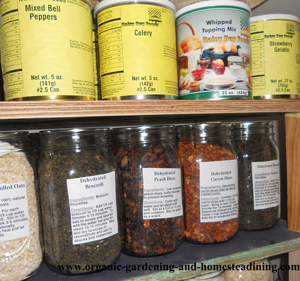
Here are some items that are good for storing.
If you buy through links in this post, I may earn a small affiliate commission at no extra cost to you - thank you for supporting Joyful Homesteading.
The Obvious Canned Goods
Canned goods can last for two years or more, but you must rotate your goods so that the older items are up front and the newer items are toward the back. It may seem like a pain, but I do this every time I come back from the grocery store with canned goods.
For example, I like diced tomatoes and use them for making soups and chilis. Whenever I buy canned tomatoes, I take out all of the canned tomatoes from my pantry and put the new cans toward the back and the older items toward the front. I keep a six-month supply of tomatoes, and I don't want any of them to go to waste.
So I have food for an emergency, but I am also using them before they go to waste.
The Beauty of Whole Grain
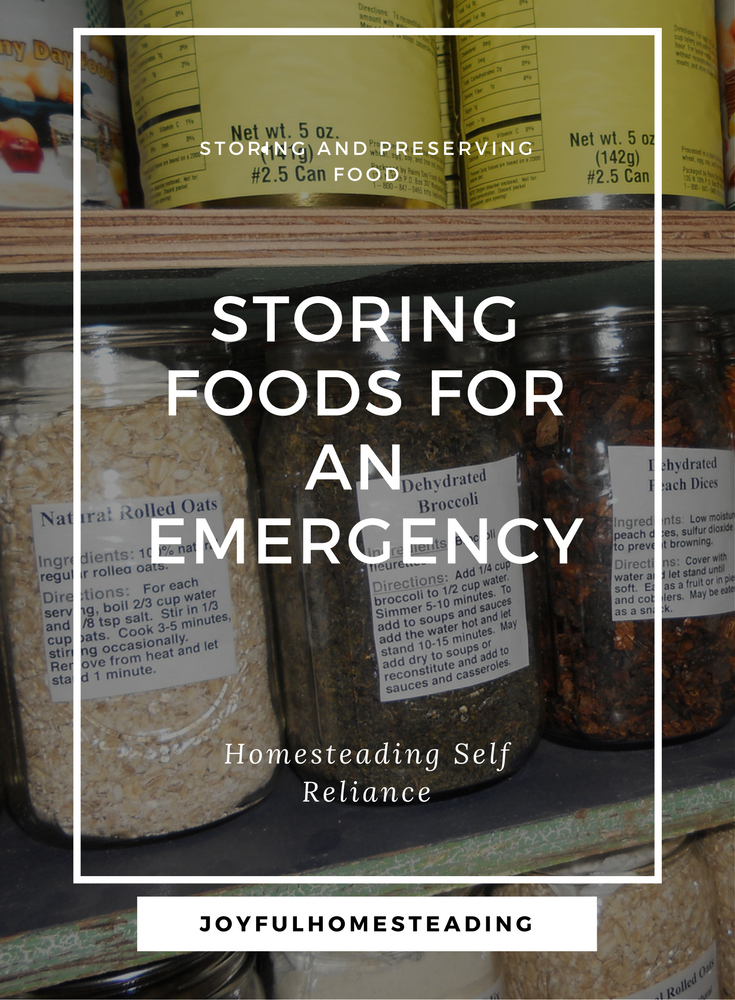
Whole grains are an essential part of emergency food preparedness, but they're also a boon for saving money, improving your health and having some of the best tasting foods out there.
Buy your grains in bulk, and invest in a grain mill. Then learn to make your own fresh bread. You'll save money and have plenty of food on hand. No more running to the grocery store all the time!
Make Your Own Pasta
Want fresh pasta on a daily basis, even in an emergency? For awesome, low-cost daily eating as well as emergency food preparedness, invest in a hand-operated grain mill and a hand-operated pasta maker.
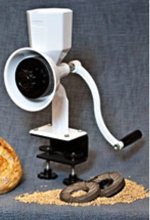
I have a Wondermill Junior Hand Grain Mill (pictured left, you can find one here), and while it is a good workout to grind your own flour manually, I can generally grind enough flour to make pasta in about ten minutes.
Just recently I bought my first manual pasta machine, and we like it, although it is difficult to clean. My son helped me make pasta the other day, and I was amazed at how easy it was. The end result wasn't as pretty as you would find in the store, but the taste was fantastic.
To make pasta, I grind two cups of durum wheat and put the flour in a bowl along with three eggs and enough water to make a dough. Knead it for about five minutes until the ingredients are thoroughly mixed and then run it through the pasta maker. It makes about a pound of pasta.
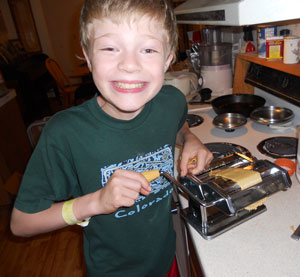
My son working the hand-operated pasta mill. You can find one here.
Emergency Food Preparedness
And Wonderful Beans
Buy plenty of beans in a wide variety and start cooking them every week. Cook a large pot of pinto beans and freeze them for later use in soups or with brown rice. The same goes for black beans, navy beans and lima beans.
Also don't forget lentils, some of the easy legumes out there. They can be cooked in about twenty minutes and can be used as a substitute for any recipe calling for ground beef, including this great casserole dish.
Learn More About Being Prepared
Learn More About Frugal Cooking
Return from Emergency Food Preparedness to the Home Page
About the Author
My name is Sue Merriam, and I began the journey of self-reliant living more than three decades ago, which enabled me to stay home with my children. Fifteen years ago, I founded Joyful Homesteading to help others save money and face the future without fear. My goal is to give you practical, honest advice so you can save money and experience the joy of simple living. I hope you join me.
Recent Articles


-
Homesteading Legal Restrictions in HOA Communities
Aug 31, 26 05:48 PM
 Homesteading legal restrictions in HOA communities is possible, but check with your HOA and local laws.
 -
Solar Batteries for Emergency Backup During Outages at Home
Aug 19, 26 12:23 PM
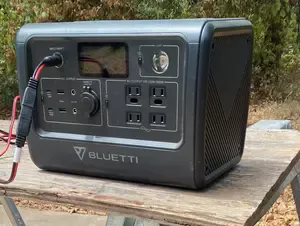 Learn what solar batteries can realistically power in an outage, how long they last, and what works best for you.
 -
Facts About Solar Panels
Aug 15, 26 10:30 PM
 Facts about solar panels are good to know when considering solar power for your off the grid homestead.