What is CCD?
What is CCD? It's the acronym for colony collapse disorder, a mystifying condition causing millions of bees to vanish, threatening the world's food supply. It started in 2006 and continues to be an ongoing problem. Bees who seem perfectly healthy leave their hive in the morning and don't return in the evening, leaving behind brood, a queen, and food that the few adult bees left won't touch.
It’s devastating for beekeepers who depend on their trusty little insects for a living. Some keepers have lost up to 90 percent of their colonies within weeks. No one knows why this is happening, but theories abound.
Possibilities include toxins in the environment, genetically modified crops, new, unknown diseases, and pathogens. But at the time of this writing, the cause is still unknown.
But the good news is, we who are self reliant have a way to save the bees.
But beekeeping isn't as simple as it once was. I've heard old-timers talk about how easy it used to be to keep bees. Simply put a hive out in a field and rob it once a year. But bees are more fragile these days, and they need special care.
Leave them to their own devices these days, and they could easily disappear.
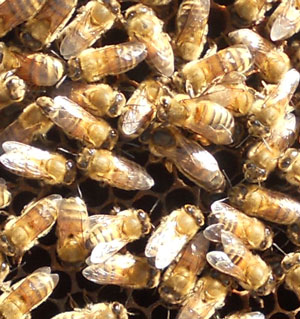
Considering that honey bees are a valuable asset in productive crops, often increasing profits by billions of dollars, this is a serious issue.
What is CCD's Cause?
No one is quite sure what causes CCD, but theories have included signals from cell phone towers (eventually disproven), viruses, and mites. Some have put the blame on the extreme stress commercial beekeepers put on their bees.
Commercial pollination is big business, and many commercial beekeepers keep their bees working year-round by packing them up in the winter and moving them to Texas and California, tricking them into thinking it's an early spring.
The bees never get a chance to hibernate, rest, and consume the protein they need for good health. Plus, they are exposed to other bees from around the country. As a result, they are vulnerable to viruses and can easily become ill.
However, another culprit could very likely be the GMOs that are now being grown virtually everywhere in the United States as well as around the world. Studies have shown that long-term use of GMOs has caused tumors and death in rats. If GMOs kill rats, one can only wonder what it is doing to the insects that feed off the pollen of those GMO plants.
CCD and Our Food Supply
But a more important question than what is CCD is what colony collapse disorder is doing to our world's food supply. Without pollination, our food won't grow, and insects, and especially bees, are responsible for about one-third of our nation's food.
If bees continue to disappear, our very survival may be threatened. But the good news is, we homesteaders can make a difference both in the continuation of bees and our nation's ability to provide food.
How Homesteaders Can Help
By joining a local beekeeper's group, learning beekeeping techniques, and keeping a hive or two of bees (and letting them rest in the winter), you can do your part to ensure our children and grandchildren will enjoy the benefits of bees for years to come.
Here are some things to remember:
Tips to Prevent CCD
Don’t combine collapsing colonies with healthy ones. The sick colony could infect the healthy one. Instead, keep the two colonies separate. Also, don’t let neighboring colonies use equipment that came from those of the collapsed hives.
Your bees can sometimes contract Nosema, a type of parasite that affects the mid-gut of your bees. Bees affected by Nosema are not able to produce royal jelly secretions, meaning they are unable to rear brood, leading to a shorter lifespan for your bees. If left untreated, your bees could die. Prevent Nosema by feeding your bees regularly, and use Fumagillin to treat your infected bees. Place the Fumagillin in sugar water both in the fall and the spring.
Also, be vigilant in your bee management. Take a beekeeping course to learn how to properly care for your bees and check your hive once a month to ensure your bees seem happy and healthy.
With good management, we can help save the bees and ensure we have enough pollinating insects around to provide food for our world.
Return from What is CCD to the Home Page
About the Author
My name is Sue Merriam, and I began the journey of self-reliant living more than three decades ago, which enabled me to stay home with my children. Fifteen years ago, I founded Joyful Homesteading to help others save money and face the future without fear. My goal is to give you practical, honest advice so you can save money and experience the joy of simple living. I hope you join me.
Recent Articles


-
Homesteading Legal Restrictions in HOA Communities
Aug 31, 26 05:48 PM
 Homesteading legal restrictions in HOA communities is possible, but check with your HOA and local laws.
 -
Solar Batteries for Emergency Backup During Outages at Home
Aug 19, 26 12:23 PM
 Learn what solar batteries can realistically power in an outage, how long they last, and what works best for you.
 -
Facts About Solar Panels
Aug 15, 26 10:30 PM
 Facts about solar panels are good to know when considering solar power for your off the grid homestead.