Off the Grid Farm:
Is It Right For You?
An off the grid farm is possible. So, what does the term mean? It means growing as much of your own food and providing your own electricity, water and sewer. In other words, living much as our ancestors did, without relying on large companies to provide for one's needs.
But is it right for you? It's a lifestyle that can be daunting, but it is also highly rewarding. Here's what it takes to live - and farm - off the grid.
It Means Providing Your Own Power
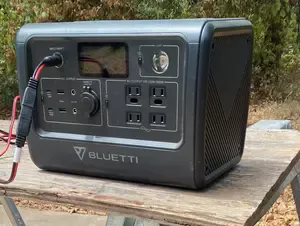
To live completely off the grid, you will need to supply your own power. If you live in an area that has plenty of sunshine throughout the year, you might consider investing in solar panels.
How Solar Panels Work
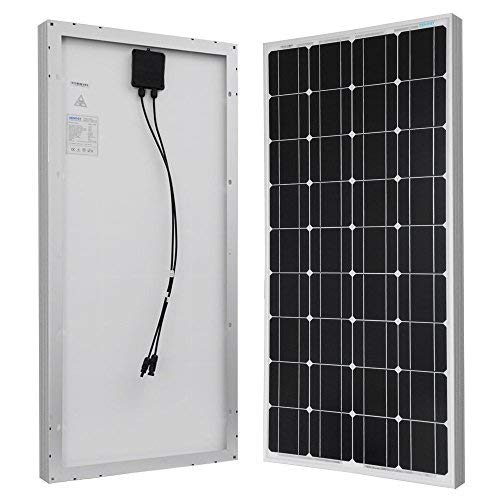
Through nuclear fusion, the sun’s core creates waves and particles called photons, a form of energy. A solar panel is made from silicon, a semiconductor. When the photons from the sun hit those silicon cells, electricity is created that is then stored in a power bank. In other words, solar panels capture light from the sun and convert it into electricity.
On each side of the solar cells are metal plates. These capture the electricity and transfer it to wires. The electricity then runs from the wires into a solar inverter that then converts it from direct current into alternating current that can either immediately power your home or be stored in a power bank.
If you live in an area that's more cloudy than sunny, solar power might not be the most effective way to get power. If it's windy where you live, you might consider a wind turbine instead.
How Wind Power Works
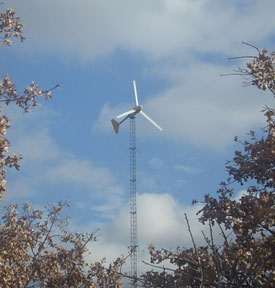
The old-fashioned wind turbines were around for centuries and used primarily for pumping water out of the ground and to grind flour. But these days, harnessing the power of air is being recognized as a viable source of electricity.
So, how does a wind turbine work?
Any time the sun hits the earth unevenly, it creates wind. Here in Oklahoma, that happens all the time. If wind is a constant where you live, you might consider investing in a wind turbine. A wind turbine is made up of curved blades connected at a central hub. The blades catch the wind, causing them to spin and turn a shaft inside the machine’s turbine.
The spinning turbine creates electricity. Electricity is created by spinning a magnet. So the way air power works is simple. Moving air passes over the blades of the turbine, making it turn. The rotating blades then turn a shaft inside the turbine which goes into a gearbox. The gearbox increases the rotation speed for the generator, creating a magnetic field which in turns creates electricity.
So, which system would work better for you? If you have sufficient sun, then solar would be much more affordable. Solar generators are also much easier to maintain.
Life on an Off the Grid Farm
Of course, life on an off the grid farm isn't just about creating your own electricity. It's also about supplying your own water, trash disposal, and sewage.
Obtaining Your Own Water
You can obtain your own water in a number of ways, including having your own well. Or you can collect rainwater and store it in rain barrels. If you choose this route, it would be wise to have a good water filtration system to make sure the water you collect is drinkable.
Growing Your Own Food
Another important aspect of having an off the grid farm is to be able to produce your own food, enough of it to live off of for an entire year. That means having a good-sized garden and being able to store that food safely.
For root vegetables, including turnips, beets, and potatoes, dig a root cellar and store your vegetables and fruits (such as apples) there. You can also preserve your foods by canning them, dehydrating them, and even fermenting them.
You can also produce your own meat and eggs by raising chickens, cattle, and other livestock, such as goats and pigs. You can store your eggs long-term by either keeping them in a sulfur solution or by dehydrating them.
For meat, you will need a freezer, or you will need to either can or dehydrate your meat to ensure it lasts for a long time.
Disposing of Your Waste
And finally, you will need to think about how you will dispose of your waste. By using a composting toilet, you can convert that waste into compost. You can also compost kitchen scraps into soil. Just make sure you don't add any meat to your compost pile as it will attract rodents.
Learn More About Going Off the Grid
About the Author
My name is Sue Merriam, and I began the journey of self-reliant living more than three decades ago, which enabled me to stay home with my children. Fifteen years ago, I founded Joyful Homesteading to help others save money and face the future without fear. My goal is to give you practical, honest advice so you can save money and experience the joy of simple living. I hope you join me.
Recent Articles


-
Benefits to Organic Gardening
Sep 21, 26 03:37 PM
 Benefits to organic gardening include the best, fresh delicious harvests.
 -
Homesteading Legal Restrictions in HOA Communities
Aug 31, 26 05:48 PM
 Homesteading legal restrictions in HOA communities is possible, but check with your HOA and local laws.
 -
Solar Batteries for Emergency Backup During Outages at Home
Aug 19, 26 12:23 PM
 Learn what solar batteries can realistically power in an outage, how long they last, and what works best for you.