Foxfire Books
Foxfire books are handy tools for anyone interested in self-reliance. Their history is a great example of what one man can accomplish when he breaks away from the traditional way of doing things.
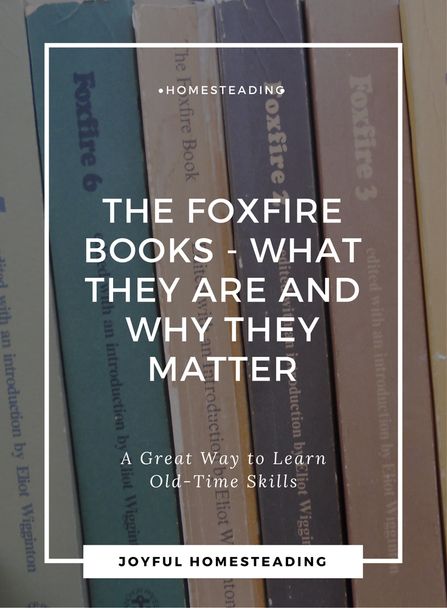
When I first dated my husband more than thirty years ago, I noticed a set of paperback books on his shelf that all said the same thing - Firefox. I asked him what the books were about.
“Lots of neat stuff,” he said.
Neat stuff, indeed. During the 1970s, the books became popular with the back-to-the-land movement. People who wanted to pursue simplicity embraced these books. That’s why my husband had them. He’s a back-to-basics guy, one of the reasons I love him.
In the Foxfire series, you can find a wealth of traditional skills that would have been lost, perhaps forever, were it not for a man by the name of Eliot Wiggington.
Foxfire Books and Their Inauspicious Start
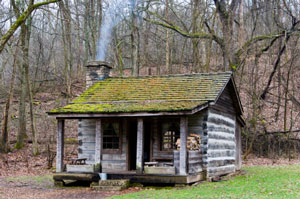
In the mid-sixties, Eliot Wigginton graduated with a Master's degree in teaching and took a job as an instructor in a small rural school in the Appalachian Mountains.
Unfortunately, his students, bored by the traditional texts he was using, began to rebel.
Desperate for a new way to get his students interested in learning, Wigginton suggested they start a magazine. This magazine would form the basis for later books.
A Study of Folklore
The school had no money to print the magazine, so the students went out and collected donations. A lack of funds also forced them to focus on folklore, a more sellable topic than poetry - something they initially toyed with.
For the title, the students chose Foxfire, a small,
glow-in-the-dark organism that was often found in the shaded coves of
the Appalachian mountains.
And as for the contents of the
magazine and later books, the students went home and talked to their
parents and grandparents to learn about the old ways, home remedies,
superstitions, and stories from the past.
A Gradual Success
The students initially collected enough funds to print up 600 copies of the first magazine. They quickly sold those 600 copies and then printed 600 more.
They continued printing new editions of the magazine. Although they nearly went bankrupt a couple of times, many saw the value of Foxfire for preserving posterity if nothing else.
"Daily our grandparents are moving out of our lives, taking with them, irreparably, the kind of information contained in this book," Wigginton wrote in book one of the Foxfire Books. "They are taking it, not because they want to, but because they think we don't care."
Unfortunately, Wigginton was arrested in 1992 for child molestation, and he’s no longer associated with the books. Today, a board of directors oversees the books, and they’re still popular today.
The Value of These Books Today
So, what can you learn from these books? How about how to cook on a wood-burning stove? Or how to butcher a hog, including scalding the body and scraping away the hairs. Or how about learning how to cook possum? (You boil the meat until it’s tender and then you bake it with sliced sweet potatoes).
Back then, outsiders mostly focused on the poverty in Appalachia, coal mining, and the opioid epidemic. But the Foxfire series brought attention to their unique and rich culture.
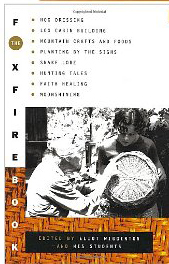 |
Topics covered in the first of the books include how to build a log cabin, how to make a rope bed, and dressing and cooking wild animals like groundhogs, possums and squirrels. You can also learn about home remedies and how to cook in a fireplace. |
Want to learn about preserving vegetables? It's in there along with mountain recipes and even tips on the fine art of moon shining. These are rich books that those with a homesteading heart will love.
Our ancestors from a couple of generations back pursued simple living, stayed out of debt, and ate better than most people do today. They understood, as most people today don't, the importance of family, heritage, and culture.
If you're interested in pursuing a simpler, debt-free life, you can't go wrong with investing in the Firefox books. They truly are a treasure trove of useful information. But more importantly, they preserve our roots, culture, and heritage.
You can find these books here.
Learn More About Being Prepared
Learn More About Self-Reliant Living
Return from Foxfire Books to the Home Page
About the Author
My name is Sue Merriam, and I began the journey of self-reliant living more than three decades ago, which enabled me to stay home with my children. Fifteen years ago, I founded Joyful Homesteading to help others save money and face the future without fear. My goal is to give you practical, honest advice so you can save money and experience the joy of simple living. I hope you join me.
Recent Articles


-
Homesteading Legal Restrictions in HOA Communities
Aug 31, 26 05:48 PM
 Homesteading legal restrictions in HOA communities is possible, but check with your HOA and local laws.
 -
Solar Batteries for Emergency Backup During Outages at Home
Aug 19, 26 12:23 PM
 Learn what solar batteries can realistically power in an outage, how long they last, and what works best for you.
 -
Facts About Solar Panels
Aug 15, 26 10:30 PM
 Facts about solar panels are good to know when considering solar power for your off the grid homestead.