Dehydrate Meat
Dehydrate meat, and you have a healthy, low-cost beef jerky that can last up to a year or more if stored properly. Homemade jerky can be made with any type of meat, including ground beef or ground turkey.

Jerky is great to take on hikes or to simply enjoy as a snack. It's also an excellent way of being prepared for an emergency. Use a vacuum sealer to seal your jerky, and it can last up to one year out of the freezer.
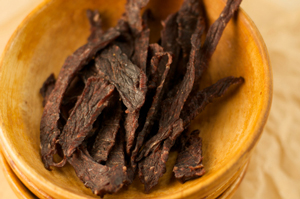
Storing Your Homemade Jerky
Before storing your meat, always make sure your meat is completely cool. Otherwise, it will sweat and start to mold. Home-dried jerky will last for one to two months on the shelf. If you made your jerky without salt, you must refrigerate it and use it within two weeks.
If you don't plan to eat your jerky for awhile, then package it very tightly and put it in your freezer. If it's tightly wrapped and in the freezer, your jerky can last for several months up to a year. Vacuum pack your jerky using a vacuum sealer, and it will have a far longer shelf life.
How to Dehydrate Meat to Make Beef Jerky
You can make a less expensive jerky with either ground beef or ground turkey and then place it in your dehydrator for about four hours. The recipe follows:
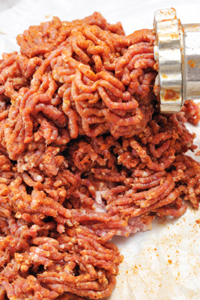
- 1 pound of ground beef or turkey
- 1/2 teaspoon onion powder
- 1/2 teaspoon garlic powder
- 1/8 teaspoon pepper
- 2 tablespoons Worcestershire sauce
- 2 tablespoons Soy sauce
- 1 tablespoon ketchup
- 1 teaspoon kosher salt
Place all of the ingredients in a bowl and mix them together thoroughly. Put your mixture in a Jerky Gun (you can see one here) or you can place the meat mixture between two pieces of plastic wrap and roll it flat. The mixture should be less than 1/8-inch thick.
When dehydrating meat, it's important to use a dehydrator with a temperature control (you can find one here). The meat should be dried at a consistent temperature of at least 160 degrees Fahrenheit. Place the meat on your dehydrator trays to dry according to the manufacturer's directions. About halfway through the process, turn your jerky strips for even drying. This recipe makes 12 servings of jerky.
Use Your Dehydrator to Dehydrate Beef
I got this recipe from the fabulous website BackpackingChef.com. Chef Glenn has more than 100 dehydrated food recipes that have been trail-tested, and they’re all delectable.
My son and a friend of his went on a hunting trip last fall, and I prepared several of Chef Glenn’s recipes. My son declared them delicious, and I didn’t have to worry about my poor son and his friend starving while they were tramping about on a mountain top looking for elk.
Here’s Chef Glenn’s recipe for dehydrated ground beef prepared in a way that comes out moist, unlike many other recipes for dehydrated beef:
Chef Glenn’s Dehydrated Ground Beef Recipe
Glenn’s secret is to add starch to the meat. For every pound of ground beef, add 1/2 cup of starch, such as ground oatmeal, fine breadcrumbs, or ground chickpeas. I put a slice or two of bread in my food processor and ground it fine before adding it to the beef. If you have gluten issues, you can add a slice of gluten-free sourdough bread to your meat.
Only use beef that is between seven and ten percent fat. The lower the fat, the less chance the meat will spoil after it’s dried. Grass-fed beef is an excellent choice for this recipe.
Using your hands, work the breadcrumbs into the raw meat. Then pat the meat into a ball and allow it to rest for a few minutes. Then break up the ball into small pieces and cook them in a frying pan over medium heat, stirring constantly. Once the meat is cooked, place the meat on a paper towel and then cover with another paper towel. Squeeze the meat to remove the moisture.
As the beef dries, you might see beads of fat on the surface of the beef once it’s cooked. Blot off that fat a couple of times using paper towels.
Spread the cooked meat on silicone mesh sheets or nonstick dehydrator trays and dehydrate at 145 degrees Fahrenheit or 63 degrees Celcius for about six hours. The ground beef will be hard when it is dry.
During the drying process, blot away the oil with a paper towel once or twice. Make sure you break the meat up into smaller pieces to allow it to dry more quickly.
Learn More About Frugal Cooking
Learn More About Being Prepared
Return from Dehydrate Meat to the Home Page
About the Author
My name is Sue Merriam, and I began the journey of self-reliant living more than three decades ago, which enabled me to stay home with my children. Fifteen years ago, I founded Joyful Homesteading to help others save money and face the future without fear. My goal is to give you practical, honest advice so you can save money and experience the joy of simple living. I hope you join me.
Recent Articles


-
Homesteading Legal Restrictions in HOA Communities
Aug 31, 26 05:48 PM
 Homesteading legal restrictions in HOA communities is possible, but check with your HOA and local laws.
 -
Solar Batteries for Emergency Backup During Outages at Home
Aug 19, 26 12:23 PM
 Learn what solar batteries can realistically power in an outage, how long they last, and what works best for you.
 -
Facts About Solar Panels
Aug 15, 26 10:30 PM
 Facts about solar panels are good to know when considering solar power for your off the grid homestead.