Storing Root Vegetables
Storing root vegetables such as potatoes, carrots, and beets will help you keep your hard-earned garden produce fresh for months. It's also a great way to take advantage of any organic produce you find on sale, or pick at a local orchard.
By using proper techniques, you can store these foods for up to eight months, depending on the vegetable. Here's what you need to know about how to store your produce long-term.
Storing Root Vegetables
The trick to properly storing vegetables for the long term is to provide your food with the right temperature and humidity. You don't want your vegetables to freeze, but you don't want them to get warm enough to sprout and then spoil, either.
Provide a place that is kept between 32 and 40 degrees Fahrenheit and with sufficient humidity (about 95 percent), and you can store root vegetables for months, depending on the vegetable.
For example, carrots can last up to six months if properly stored, and potatoes can last up to eight months.
If you're fortunate enough to have a root cellar, you can store vegetables by placing them in a crate or cardboard box with plenty of ventilation and then covering them loosely with either sand or peat moss to help regulate moisture.
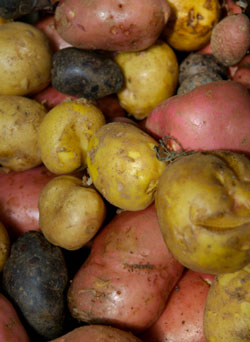
Potatoes can last up to eight months if stored properly.
But let's face it: root cellars take a lot of time and effort to build. We're in the process of finishing ours, which is also doubling as a storm shelter, but it took years to get to this stage.
Fortunately, there are other, more low-cost ways to preserve your vegetables. If you live in the North and you don't have a root cellar, you can store your root vegetables in the basement, the crawl space of your house, or a mud room - any place that stays cool. Again, store them in a crate or cardboard box containing either sand or peat moss.
In places with mild winters and no hard frosts, a simple, low-cost method of storing root vegetables is clamping.
Storing Root Vegetables
and Clamping
Clamping stored vegetables is a method where you store your vegetables above ground, then cover them with several inches of organic matter and earth. Storing root vegetables this way provides good insulation and keeps your vegetables safe, cool, and dry for months.
How to Build a Vegetable Clamp
After harvesting your vegetables at their peak, allow them to dry on the surface of the ground for a couple of hours. Then you'll need to find a patch of ground that is dry and not likely to become waterlogged in a hard rain.
Pile about six inches of straw on the ground. Then pile your vegetables on top of this in the shape of a pyramid.
By the way, it's much better to build several small clamps rather than one large one. That way, when you want to take vegetables out of the clamp, you won't have to completely rebuild it - a bit of a pain in the wintertime.
Allow Your Clamps to Sweat
Once you have your vegetables piled up in a pyramid - or several pyramids - cover them with about six inches of straw. Then allow your vegetables to sit like that for a couple of days. That allows excess moisture to evaporate out of the clamp, a process known as sweating.
Cover Your Clamps with Earth
Next, you will need to cover your clamps with about six inches of dirt. The soil you use will need to be fairly dry, and you will also need to provide ventilation for your vegetables by allowing pieces of straw to poke through the top and along the bottom of your pyramid. Using a spade, pat the soil to make your pyramid smooth and steep-sided so that the rain will run off easily.
If you plan on storing root vegetables in large amounts, you might also consider making clamps that are long and narrow. That way you can take out vegetables from one end without disturbing the remaining vegetables and then recovering the end.
Or Build a Poor Man's Root Cellar
Another way to store root vegetables such as carrots or potatoes is to build a poor man's root cellar. Buy a stainless steel trash can that can hold 50 gallons. Drill small holes in the bottom of the can for drainage.
Dig a hole in the ground deep enough that the top rim of the trash barrel reaches the top of the soil, and place the can in the hole. Place a layer of gravel on the bottom of the can.
Store your potatoes or carrots in the barrel by keeping them in a box. If you plan on storing potatoes, place a layer of potatoes in the box so that they are not touching and they are not piled one on top of another. Then cover the layer with newspaper. Continue layering the potatoes this way until the box is full. You can store two or three of these boxes in the trash receptacle.
Or, if you want to store carrots, buy clean, unused peat or compost, and again, place the carrots in a box, layering them so they do not touch each other. Cover each layer with the peat or compost and continue layering them until the box is full.
After placing the boxes in the receptacle, place the trash lid on top and then cover it with a plastic tarp to keep the rain out.
Learn More About Going Off the Grid
About the Author
My name is Sue Merriam, and I began the journey of self-reliant living more than three decades ago, which enabled me to stay home with my children. Fifteen years ago, I founded Joyful Homesteading to help others save money and face the future without fear. My goal is to give you practical, honest advice so you can save money and experience the joy of simple living. I hope you join me.
Recent Articles


-
Benefits to Organic Gardening
Sep 21, 26 03:37 PM
 Benefits to organic gardening include the best, fresh delicious harvests.
 -
Homesteading Legal Restrictions in HOA Communities
Aug 31, 26 05:48 PM
 Homesteading legal restrictions in HOA communities is possible, but check with your HOA and local laws.
 -
Solar Batteries for Emergency Backup During Outages at Home
Aug 19, 26 12:23 PM
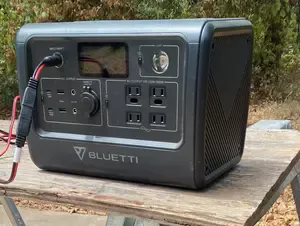 Learn what solar batteries can realistically power in an outage, how long they last, and what works best for you.