Raising Chickens for Meat
Raising chickens for meat is not only a great, low cost way to have meat on your table, but is also a far healthier way of eating. When you raise your own chickens, you have control over what goes into your chickens (and ultimately what goes into you) and how your chickens are processed.
What I Learned From
Raising Chickens for Meat
This past summer a friend and I raised 50 broilers and then butchered them. Nothing the grocery store offers can compare with the taste of your own fresh chicken meat.
And butchering 50 chickens at one time wasn't nearly as intimidating as I thought it would be.
But before you order 50 or more chicks from a hatchery, keep these points in mind:
Raise Broilers
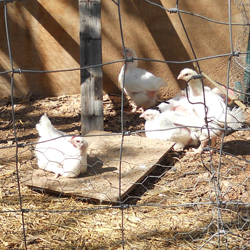
Although there are some dual purpose breeds out there that are supposed to be good layers and good for meat, such as Rhode Island Reds, you are really better off ordering chickens that are bred specifically for producing more meat.
The Cornish Rock breed is a good breed that has a large breast bone and is a calm chicken all around.
Raise Them in Cool Weather
Broilers tend to be hot birds that can generate a lot of heat on their own, so it's better to raise broilers in the cooler seasons, such as fall, winter and spring.
We made the mistake of raising broilers during the hot months this past summer. The temps reached over 100 degrees every day from June through the end of August, and we lost birds to the heat before we were able to butcher them.
Consider Feeding Your Broilers
Sprouted Wheat
If you have a sprouter, consider feeding your broilers sprouted wheat and other sprouted grains along with their feed. Sprouts are packed with nutrition, and your chickens will have more meat and far less fat if they are given a diet of sprouted grains or, in addition to, their grower ration.
But keep in mind that they still need grower ration. The grower feed from the grain supply store has the vital nutrients you need to keep your flock healthy and growing until you are ready to butcher them.
We made the terrible mistake of just feeding our chicks sprouts one time, thinking the sprouts would supply all of their needs - and we lost several birds. So, be sure to give them grower ration. Consider the sprouts to be a healthy, after-meal treat.
Make Your Chickens Soil Builders
Another benefit of raising chickens for meat is your chickens can be soil builders as well as meat builders. If you plan on keeping your broilers in an enclosed pen, use straw for bedding and add more straw daily.
Your chickens will scratch around in the straw, trample it underfoot, add manure and splash water on the straw on an hourly basis. Keep adding new straw daily, and at the end of ten weeks, you will have a nice, raised garden bed for your next organic garden.
Or better still, keep your chickens in chicken tractors that you move every few days. That way, your flock will get fresh grass and bugs to nibble on in addition to their regular feed. You will have a healthier flock and improved soil.
Protect Your Flock From Predators
Chickens are delicious; it's the one thing that every member of the human and animal kingdom agrees on. Coyotes, possums, raccoons, and the neighborhood dogs would all love to dine on your chickens before you get the chance to butcher them. That's why it's so important to protect your flock.
Many people use lightweight cages covered in chicken wire to keep their flock. I can understand the appeal. Because it's so lightweight, it's easy to move around without spraining your back. However, a dog, coyote, possum, or raccoon could easily chew through the wire and get at your flock.
A raccoon will rip the head off your chickens for fun. Dogs will happily snap their necks. Protect your flock by building a nesting box made of balsam or other lightweight wood that's off the ground and has a ramp your chickens can climb to enter the box. Then include a door that you can slide shut at night.
By adding this to our chicken tractor, we have been able to protect our chickens from nighttime predators. If you have a dog that sleeps outside at night, that will work as well...so long as your dog doesn't get a taste for fresh chicken.
Learn More About Raising Chickens
Return from Raising Chickens for Meat to the Home Page
About the Author
My name is Sue Merriam, and I began the journey of self-reliant living more than three decades ago, which enabled me to stay home with my children. Fifteen years ago, I founded Joyful Homesteading to help others save money and face the future without fear. My goal is to give you practical, honest advice so you can save money and experience the joy of simple living. I hope you join me.
Recent Articles


-
Benefits to Organic Gardening
Sep 21, 26 03:37 PM
 Benefits to organic gardening include the best, fresh delicious harvests.
 -
Homesteading Legal Restrictions in HOA Communities
Aug 31, 26 05:48 PM
 Homesteading legal restrictions in HOA communities is possible, but check with your HOA and local laws.
 -
Solar Batteries for Emergency Backup During Outages at Home
Aug 19, 26 12:23 PM
 Learn what solar batteries can realistically power in an outage, how long they last, and what works best for you.