Passion Fruit Benefits
Passion fruit benefits. Is this surprisingly good vine growing in the wild in your backyard? Once a tropical fruit, the passion fruit plant is now growing in the wild in many parts of the United States and can provide a delicious treat for you and your chickens as well. Here is some helpful information as well as some of the benefits of passion fruit.
Historians believe that this amazing fruit came from Brazil, specifically the Amazon rainforests. The indigenous tribes cultivated passion fruit. Eventually, European explorers discovered this amazing fruit as well and brought it back with them to Europe.
The plant got its name “passion fruit” from Spanish missionaries who saw the vine as a symbol of Christ’s crucifixion. According to the missionaries, the parts of the flower and the way the petals were arranged told the story of the Passion of the Christ.
The fruit spread from Spain and Portugal to Africa, Asia and other parts of the globe. The fruit grows best in warmer climates, but it can be found in my native state of Oklahoma and is likely in other parts of the Southern United States.
The Passion Fruit Vine
Passion fruit is a shallow-rooted woody perennial vine that can be found climbing on fenceposts and anything else it can wrap its tendrils around.
It produces a single flower that can be used to make a fragrant passion fruit tea.
In addition, it produces a round, slightly shriveled fruit with a tough rind ranging in color from light yellow or pumpkin to dark purple.
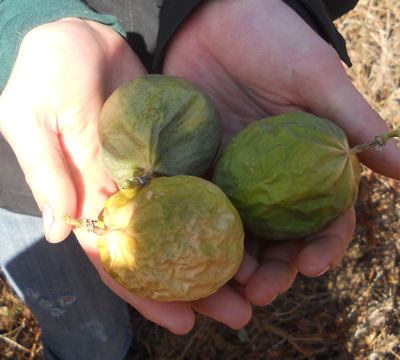
They are also sometimes called may-pops (they may pop when you step on them).
Open the fruit and inside are sweet-smelling membranous sacs filled with pulpy seeds and juice that can be eaten raw (seeds and all) or used to make delicious sauces, ice cream, pies, or even cocktails. I recently had a tasty drink made with passion fruit, cream, and ginger ale.
But please remember the wildcrafting rule when it comes to food found in the wild. Only harvest approximately 25 percent of whatever wild food you find so that it can reseed itself and grow more the following year. That way, you will be able to enjoy passion fruit for years to come.
Passion Fruit Benefits
Passion fruit is loaded with vitamins C and A (one cup of passion fruit provides 25 percent of your recommended daily requirement of vitamin A), as well as containing potassium and iron. Passion fruit seeds provide much-needed fiber.
Passion fruit also has antioxidants that protect you from damaging free radicals and premature aging. Eating the fruit can help you relax and is good for easing anxiety and high blood pressure.
How to Use Passion Fruit
Cut the fruit in half lengthwise, then use a spoon to scoop out the pulp, seeds, and all. Place about half a cup of the pulp in a saucepan, along with a cup of water and a cup of sugar. Bring it to a boil, stirring until the sugar is all dissolved.
Then reduce the heat and cook for about fifteen more minutes. You can use this syrup to sweeten tea, add to cocktails, or as a topping on your ice cream.
Is Your Passion Fruit Wormy?
If your passion is wormy or damaged, pop it open and feed it to your chickens. The worms have a lot of protein your flock needs.
Related article: How to turn your hickory nuts into syrup.
Related article: What you need to know about foraging wild plants.
Can You Grow Passion Fruit?
Passionfruit is a tropical plant, meaning if you live in a Northern climate, you won’t be able to grow passionfruit unless you grow it in a greenhouse. The plant thrives in USDA Hardiness Zones 9 through 11. If the temperatures in your area dip below 30 degrees Fahrenheit, your passionfruit vine won’t survive.
But if you're fortunate enough to live in a warmer climate, you can grow this amazing fruit.
Choose a sunny spot with well-drained soil. Keep the area weeded so your vines get plenty of nutrition. You’ll want to plant the seeds next to a trellis or other support so that the vines can grow.
Once established, passion fruit vines will live about seven years, and then you will need to replant them.
Learn More About Self Reliance
Return from Passion Fruit Benefits to the Home Page
About the Author
My name is Sue Merriam, and I began the journey of self-reliant living more than three decades ago, which enabled me to stay home with my children. Fifteen years ago, I founded Joyful Homesteading to help others save money and face the future without fear. My goal is to give you practical, honest advice so you can save money and experience the joy of simple living. I hope you join me.
Recent Articles


-
Homesteading Legal Restrictions in HOA Communities
Aug 31, 26 05:48 PM
 Homesteading legal restrictions in HOA communities is possible, but check with your HOA and local laws.
 -
Solar Batteries for Emergency Backup During Outages at Home
Aug 19, 26 12:23 PM
 Learn what solar batteries can realistically power in an outage, how long they last, and what works best for you.
 -
Facts About Solar Panels
Aug 15, 26 10:30 PM
 Facts about solar panels are good to know when considering solar power for your off the grid homestead.