Is Coconut Oil Healthy?
Is coconut oil healthy? Tropical oils such as coconut oil and palm oil have been demonized for years, but take another look; false advertising has likely kept you from one of the healthiest foods available.
Listen to the general media, and they'll tell you that coconut oil is something akin to the devil's spawn, unleashing an epidemic of heart disease into our country and killing thousands of people. But do a little research, and you learn otherwise.
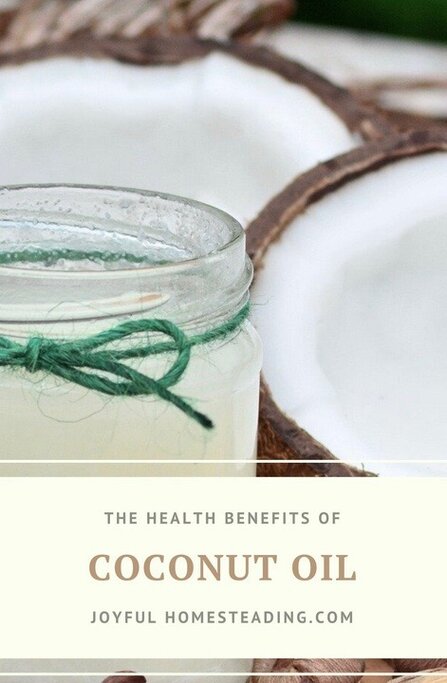
Is Coconut Oil Healthy? Research Says Yes
Research
done by the Harvard University Medical School's Nutrition Coordinating
Center, showed that coconut oil actually reduces the risks of
atherosclerosis, heart disease, cancer, and other degenerative
conditions.
It also helps prevent bacterial, viral, and fungal infections. Coconut oil provides an immediate source of fuel and energy to enable the human body to metabolize fat efficiently.
Also coconut oil does not raise your cholesterol levels.
So why is coconut oil healthy?
It has to do with the length of the fatty acid chains found in coconut
oil.
Coconut oil has medium chain fatty acids which burn up quickly in the
body, raising your metabolism, promoting weight loss and providing
special health-giving properties.
The medium chain fats in coconut oils are similar to the fats in mother's milk and are just as healing.
Studies show that the lauric acid found in coconut oil destroy several types of bacteria and viruses, including influenza,
HIV, measles, herpes simplex virus-1 and the Candida yeast infection.
So Why Aren't We Eating More Coconut Oil?
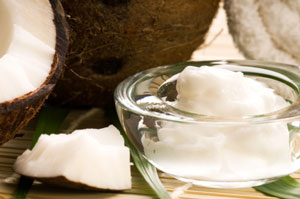
As hard as it may seem to believe now, coconut oil was once a popular
choice for cooking oil for many years. Coconut oil has a long shelf
life and a melting point of 76 degrees Fahrenheit, making it suitable
for many cooking needs.
But the domestic oil industry, fearing the competition of palm and
coconut oils, launched a smear campaign known as the "Tropical grease
campaign".
Without any scientific basis for their argument, they made coconut and
palm oils sound downright deadly to consume.
The campaign worked, and under pressure, major food processors switched to domestically produced oils.
Unhealthy Hydrogenated Oils
While palm and coconut oils resist oxidation and are high stable, domestic oils are highly unstable.
To make them harder and more stable, they need to be hydrogenated.
This turns these oils into an unnatural trans form of fat, thereby increasing the risk of coronary heart disease.
Also unlike palm and coconut oil, domestic oils require harsh chemical solvents in order to be extracted.
So the next time you plan on purchasing oil for cooking and baking, invest in your health as well as your taste and purchase coconut oil.
Your heart will thank you for it.
What’s the Difference Between Refined Coconut Oil and Extra Virgin Coconut OIl?
Go to the grocery store to buy coconut oil, and you’ll see two types: Refined coconut oil and extra virgin coconut oil. So, what’s the difference?
Virgin coconut oil - sometimes called unrefined coconut oil- means the oil was pressed from the coconut meat, but no further processing was done. The oil can be extracted from the coconuts in two different ways. The dry method and the wet method.
- Dry method - The oil is pressed from dried coconut flesh.
- Wet method - Both the coconut flesh and coconut milk are pressed and the oil is separated
Unrefined coconut oil is mainly extracted using the wet method. If the label says it was cold pressed, then that means no heat was used to extract the oil. You’ll notice that unrefined coconut oil smells like coconuts and also tastes like coconuts. Also, the oil will begin to smoke at 350 degrees Fahrenheit or 177 degrees Celcius.
What Is Refined Coconut Oil?
To get rid of the coconut taste and to raise the smoke level, some manufacturers refine their coconut oil. They may mix the oil with a degumming agent to remove the gums; the oil is then washed in water.
Or, they may add lye to the oil to form a soap. The oil is then washed in water, and the soap and free fatty acids are removed. That reduces the risk of the oil becoming rancid with time.
Or, manufacturers may run the oil through an activated clay filter. While they call it bleaching the oil, they don’t actually use any bleach.
Manufacturers may also heat the oil to remove the scent and taste of coconuts.
Refined oil has a higher smoke point of between 400 and 450 degrees Fahrenheit or between 204 and 232 degrees Celcius. This type of oil is more suitable for frying foods. It also won’t add a coconut odor or taste to your foods.
The nutritional value of both refined and unrefined oils is about the same - one tablespoon is about 120 calories. Also, both contain the healing lauric acid as well as MCTs or medium-chain triglycerides that are so good for your heart.
So, if your goal in using coconut oil is for baking and frying, refined coconut oil is your best choice. If you like the coconut smell and taste, go with the extra virgin or unrefined version.
Learn More About Natural Healing
Return from Is Coconut Oil Healthy to the Home Page
About the Author
My name is Sue Merriam, and I began the journey of self-reliant living more than three decades ago, which enabled me to stay home with my children. Fifteen years ago, I founded Joyful Homesteading to help others save money and face the future without fear. My goal is to give you practical, honest advice so you can save money and experience the joy of simple living. I hope you join me.
Recent Articles


-
Homesteading Legal Restrictions in HOA Communities
Aug 31, 26 05:48 PM
 Homesteading legal restrictions in HOA communities is possible, but check with your HOA and local laws.
 -
Solar Batteries for Emergency Backup During Outages at Home
Aug 19, 26 12:23 PM
 Learn what solar batteries can realistically power in an outage, how long they last, and what works best for you.
 -
Facts About Solar Panels
Aug 15, 26 10:30 PM
 Facts about solar panels are good to know when considering solar power for your off the grid homestead.