How to Grow Chamomile
How to grow chamomile.
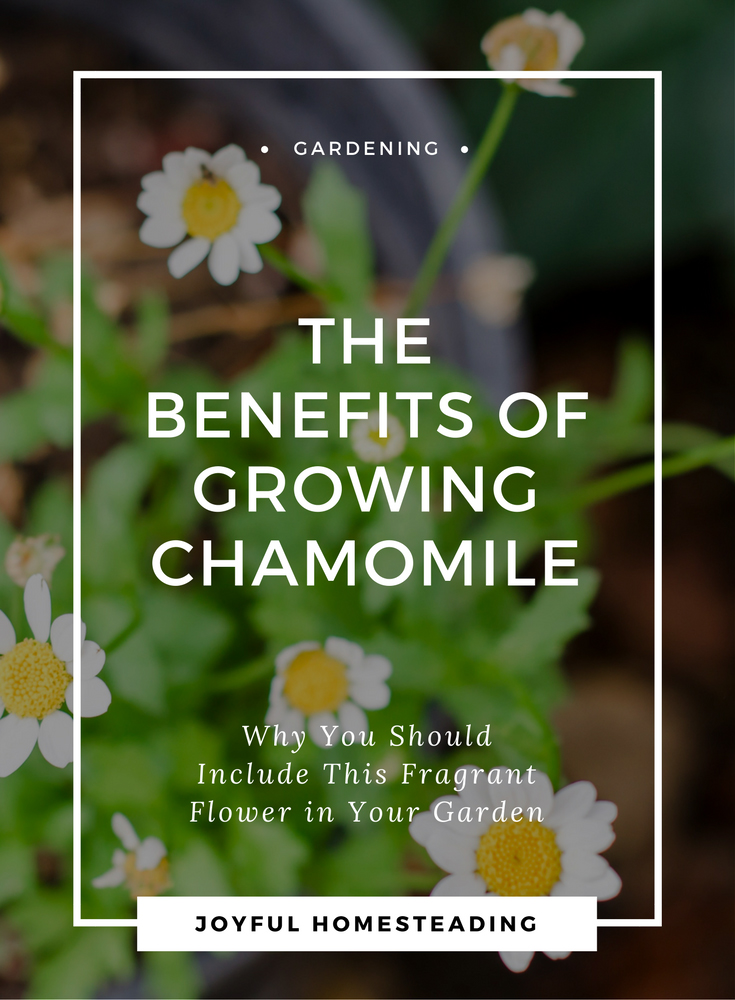
Herb Chamomile is a perennial plant that produces small flowers resembling daisies that smell slightly of apples.
It's an excellent herb to grow not only for its lovely appearance, but also because the flowers make an excellent tea.
Best of all, you'll be growing an herb with a lot of history.
Looking for
|
 |
How to Grow Chamomile
The chamomile family has approximately 25 species, but I’m talking only about two different types of chamomile that are easy to grow in your garden.
The first is the Roman Chamomile, also called the English Chamomile. This type of chamomile is a perennial plant, meaning it will come back year after year. Roman Chamomile is a low-growing plant that is frequently used for groundcover. But don’t use Roman Chamomile for tea, as it has a slight bitter taste.
The second is the one you will most likely want, and that’s the German Chamomile. This is an annual plant, so be sure to save seeds at the end of the growing season. (You can learn how here). The German chamomile reaches two feet in height and produces white and yellow blooms that have a delightful scent. You can plant German Chamomile in either your flower beds or your vegetable garden, as this lovely plant will attract the beneficial pollinators to your garden. It’s also the plant you use to make chamomile tea.
Both types of chamomile are hardy plants that tolerate just about any environment, including full sun or part shade, drought, and poor soil. Deer and pests are also less likely to eat chamomile than other types of plants.
You can sow the seeds directly in your garden, but you’re better off starting the seeds indoors in the early spring. (You can learn how to start seeds indoors here).
Planting Tips
Once your seedlings are about two inches tall, harden them off by setting them outdoors during the daytime on warm days and bringing them indoors at night so they don’t freeze. Do this for one to two weeks before planting them outdoors.
When you do plant them outdoors, don’t plant them any deeper than the size of their root balls. If you are growing German Chamomile, space your seedlings 12 inches apart. If you are growing Roman Chamomile, space them about 8 inches apart.
You can also grow chamomile in containers. Make sure the pots are well-draining and that they are at least 6 inches deep by 12 inches wide. Fill the containers with a rich potting mix.
The History of Chamomile
Chamomile has been appreciated and has been used since Egyptian times.
During the Middle Ages, gardeners used to purposely plant Roman
Chamomile in the middle of green walks so people would walk on it.
It helped release the plant's fragrance and actually encouraged its
growth.
As the old verses said:
"Like a chamomile bed - the more it is trodden, the more it will spread."¹
The Plant's Physician
Chamomile was also known at one time as a Plant's Physician;
if another plant was sickly and you planted the herb chamomile next to it, the sickly plant would get better, probably because chamomile deters pests and deer while attracting the beneficial pollinators.
You can use all of the chamomile plant, but the flowers have the greatest scent and value.
For the Medicine Cabinet
Chamomile tea is a safe and soothing sedative.
It also eases the trauma of a nightmare and is believed to help prevent them.
Combine an infusion of the herb chamomile with ginger and baking soda to
ease cases of indigestion, flatulence, colic, heartburn, loss of
appetite, gout symptoms, and headaches.
A cup of Chamomile tea, taken an hour before meals, helps increase the appetite of the elderly.
In the Kitchen
Once you learn how to grow chamomile, you'll find that in addition to making a wonderful tea,
the flowers of German Chamomile can be used in salads and to decorate cakes.
Please note: Roman Chamomile has a more bitter taste and isn't as aromatic as German Chamomile.
You can also use the herb Chamomile to make potpourri.
Put a handful of Chamomile into a muslin bag and add it to your bath to soothe your skin.
¹Mrs. M. Grieve, F.R.H.S., A Modern Herbal, (New York: Dorset Press, 1992), 186
Learn More About Medicinal Herbs
Learn More About Self Reliant Healing
Return from How to Grow Chamomile to the Home Page
About the Author
My name is Sue Merriam, and I began the journey of self-reliant living more than three decades ago, which enabled me to stay home with my children. Fifteen years ago, I founded Joyful Homesteading to help others save money and face the future without fear. My goal is to give you practical, honest advice so you can save money and experience the joy of simple living. I hope you join me.
Recent Articles


-
Homesteading Legal Restrictions in HOA Communities
Aug 31, 26 05:48 PM
 Homesteading legal restrictions in HOA communities is possible, but check with your HOA and local laws.
 -
Solar Batteries for Emergency Backup During Outages at Home
Aug 19, 26 12:23 PM
 Learn what solar batteries can realistically power in an outage, how long they last, and what works best for you.
 -
Facts About Solar Panels
Aug 15, 26 10:30 PM
 Facts about solar panels are good to know when considering solar power for your off the grid homestead.