How to Grow Borage
How to grow borage is useful knowledge, not only for growing a medicinal herb but also a vegetable that can make your other vegetables even tastier. And yes, although it is not commonly known as one now, borage was considered a vegetable once.
|
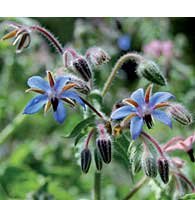
During the nineteenth century, people used to boil the young tops of Borage as a pot herb. Also the fresh leaves of Borage were once popular in salads, the leaves having a slight fragrance of cucumber. |
 |
But Borage wasn't just prized for its delicious taste. It was also a key element in joyful wellness.
In far earlier times, Borage was believed to be good for driving away melancholy, and it is still used to help ease depression. So, the next time you are struggling with the blues, reach for this handy plant rather than a pharmaceutical and all the scary side effects they often have.
Here are some tips on growing this amazing, often unknown herb.
How To Start Borage
You can either sow the seeds directly into the ground or start them indoors. I always prefer starting my seeds indoors, because that always gives my garden a head start. Weather is often unpredictable here in Oklahoma, and we get more summer here than we do spring. By starting my seeds indoors, I give my plants a better chance to survive and to beat the intense Oklahoma heat.
If you’re blessed ot live in an area that has a longer spring (lucky you!), then plant your seeds directly into the soil in early spring. Plant them between one-quarter and a half inch deep into the soil.
Borage prefers lots of light, so find a spot that gets full sun. Sow the seeds every four weeks during the growing season to ensure that you get a longer harvest.
When the plants get between four and six inches high, thin them to about 12 inches apart. After the flowers bloom and then die, deadhead them to encourage more flowers to grow.
Plant borage next to your tomato or strawberry plants to enhance the flavor of these foods.
How to Grow Borage
Harvesting Tips
Only the leaves and flowers are used both for good eating and for medicinal herbs and tea. Gather the leaves when Borage is just starting to bloom, on a sunny day, just as the dew has dried off. Strip off the leaves one by one and only keep those leaves that are not stained or insect-eaten. Harvest the leaves just before using them.
This amazing herb is worth growing for its beautiful flowers alone, but it's also valuable both as a delicious addition to salads and to promote joyful wellness.
Its Medicinal Use
Make an infusion of Borage by pouring boiling water over the herb and steeping it for ten minutes. Strain out all solid matter and drink the liquid the next time you have a cold or the flu. Borage is useful for fevers and pulmonary complaints.
It can be used as a diuretic.
It will also soothe an irritated throat and ease the irritation causing a cough.
Consider adding a Borage infusion to your homemade balms. The herb has a soothing and softening effect on your skin.
You can also make a poultice out of Borage to ease inflammatory swellings.
Borage will help heal mouth infections. It can also help clear your skin and promote healthy skin growth.
Borage is useful for balancing hormones, eases both depression and inflammation, and works as a mild sedative.
A Word of Caution...
Don't use borage if you are prone to developing kidney stones.
In the Kitchen
You can make a summer drink out of borage by seeping the leaves in water and then adding lemon, sugar and a little wine.
The flowers can be candied.
Borage is a great source of potassium and calcium so add them to your salad or boil them and serve as a side dish.
How to Grow Borage
Some Additional Growing Tips
Ordinary soil will work fine for growing borage, but if you start it from seed, then you will need a light soil.
Sow your seeds after the last danger of frost.
Borage is a perennial and will reseed itself once it is established.
If your plants get tall and spindly, cut them back in late summer.
You can also sow borage in autumn, although they won't flower until May.
Learn More About Medicinal Herbs
Learn More About Organic Gardening
Return from How to Grow Borage to the Home Page
About the Author
My name is Sue Merriam, and I began the journey of self-reliant living more than three decades ago, which enabled me to stay home with my children. Fifteen years ago, I founded Joyful Homesteading to help others save money and face the future without fear. My goal is to give you practical, honest advice so you can save money and experience the joy of simple living. I hope you join me.
Recent Articles


-
Benefits to Organic Gardening
Sep 21, 26 03:37 PM
 Benefits to organic gardening include the best, fresh delicious harvests.
 -
Homesteading Legal Restrictions in HOA Communities
Aug 31, 26 05:48 PM
 Homesteading legal restrictions in HOA communities is possible, but check with your HOA and local laws.
 -
Solar Batteries for Emergency Backup During Outages at Home
Aug 19, 26 12:23 PM
 Learn what solar batteries can realistically power in an outage, how long they last, and what works best for you.