Bees in Winter
Bees in winter are now more vulnerable than they used to be. The increase in the past decade of environmental toxins, cell phone towers, and other hazards to bees means they need special care during the cold winter months, especially if you live in an area where winters are longer, such as up in the north.
With large enough numbers, most hives can produce enough heat to stay warm even in sub-zero temperatures. While they may be a bit more irritable in winter (you would be too, if you were cooped up in a hive all winter), they typically make it to spring just fine.
But even if your bees seem to be a healthy, full-sized colony, extra care is an excellent idea to increase your brood strength. To ensure you have a truly strong hive come spring - one that will produce enough brood so you can split your hive then a few extra precautions will help your hive be healthy and productive. These steps include protecting your hive and feeding them during those long, winter months.
Protecting Your Hive
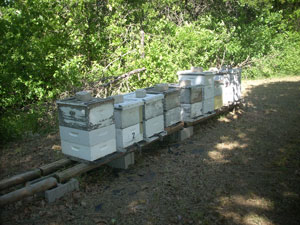
Northern temperatures, especially prolonged subzero conditions, can be brutal on your bees. No, you don't need to knit tiny mufflers for your bees, but a wind block will keep the northern wind from blowing into your hive.
If you have a small hive, and if the weather where you live gets especially cold in the winter months, you can help your hive stay warm by placing a wind block on the north side of your hive.
As anyone who has been out in the wind on a cold winter day knows, a strong wind can reduce how cold temperatures feel by 20 degrees or more. An extreme wind chill can wipe out your hive overnight, especially if your hive is located in an open area where there are no windbreaks, such as trees to block the chill of a northern wind.
Protect your bees by providing them a windbreak that is one foot higher or more than the hive. Make sure that the windbreak is at least four to six feet away from the hive. Any windbreak that is closer might direct the wind up the bottom of the hive.
If you are making your windbreak out of boards, slant them so that the top is a bit farther from the hive and the bottom of the boards is slightly closer. Again, the boards will direct the winds up and over the hive instead of directly at it.
Also, placing black tar paper on the north side will help absorb the sun's heat in the winter, helping your hive stay warm. And of course, bees in winter will fare far better if the hive's entrance is facing the south rather than the north.
Feeding Your Bees in Winter
Bees get the crucial protein they need from pollen. Typically, they store enough to last them through the winter. But if they haven't stored enough of this vital protein, they will stop making drones, and the brood will be reduced.
If you want your bees to produce extra brood in the early spring, you
can provide them with a pollen substitute.
A pollen substitute will also help your bees remain healthy and strong
during the harsh winter months.
Pollen substitute is available from most beekeeping suppliers. If the weather is warm and dry, you can set pollen substitute out in a bucket tipped on its side near the hive.
(If it's wet out, the substitute will mold pretty quickly). You can also either purchase or make a pollen patty for your bees. Add the patty to your hive only if the weather outside is 50 degrees Fahrenheit or warmer. It will be like a vitamin boost for your bees.
Also, feed your bees by making your own bee syrup. Find the recipe here.
Pollen Patty Recipe
You can make a pollen patty for your bees using the following recipe:
- One and a half cups soy flour
- One half cup of brewer's yeast
- One and a half cups granulated sugar
- Three fourths cup of hot water
Mix together the dry ingredients and set aside.
Add the sugar to the hot water and stir until the sugar is completely dissolved, making a syrup.
Slowly add the dry ingredients to the syrup until the mixture resembles a stiff bread dough.
Press your patties between wax paper.
Your bees are slower and don't move about as much in the hive in the
winter so you will want the patty to be as close to your cluster of bees
as possible.
Place your patty near your cluster of bees with the wax paper side up.
Bees in the winter months will appreciate the vitamin boost and will be healthier
and stronger through the cold months.
Return From Bees in Winter to the Home Page
About the Author
My name is Sue Merriam, and I began the journey of self-reliant living more than three decades ago, which enabled me to stay home with my children. Fifteen years ago, I founded Joyful Homesteading to help others save money and face the future without fear. My goal is to give you practical, honest advice so you can save money and experience the joy of simple living. I hope you join me.
Recent Articles


-
Homesteading Legal Restrictions in HOA Communities
Aug 31, 26 05:48 PM
 Homesteading legal restrictions in HOA communities is possible, but check with your HOA and local laws.
 -
Solar Batteries for Emergency Backup During Outages at Home
Aug 19, 26 12:23 PM
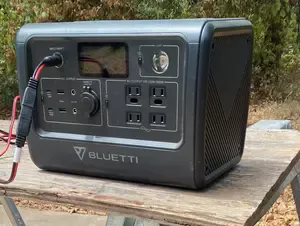 Learn what solar batteries can realistically power in an outage, how long they last, and what works best for you.
 -
Facts About Solar Panels
Aug 15, 26 10:30 PM
 Facts about solar panels are good to know when considering solar power for your off the grid homestead.