How Does Diatomaceous
Earth Work?
How does diatomaceous earth work? How can a powder do so many amazing things without hurting you or the environment? The answer lies in the power this substance has at a microscopic level.
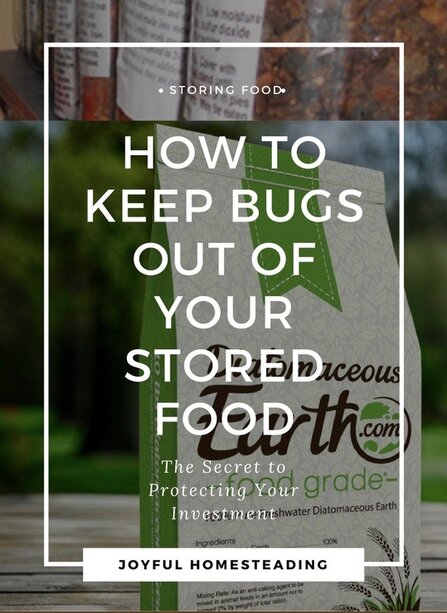
So What is Diatomaceous Earth?
Also known as DE, diatomaceous earth is the fossilized remains of marine phytoplankton.
Although it resembles a talcum powder that is off-white, it is actually hundreds of thousands of sharp little shards.
These microscopic shards can't hurt humans or animals, but they can wreak havoc on insects that have exoskeletons, including fleas, ants and even bedbugs.
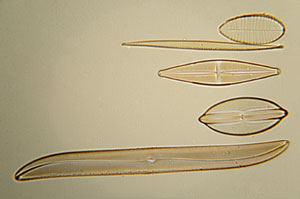
Diatoms (shown here at a microscopic level) are what make up diatomaceous earth.
Where Did It Come From?
Diatomaceous earth is made up of diatoms, single-celled algae that live in salt water, fresh water, and moist soils. They’ll live anywhere that’s damp. This handy little alga thrives because of photosynthesis, turning carbon dioxide into oxygen. It’s estimated that they make up about 75% of the oxygen we breathe here on Earth.
What’s particularly handy for us intrepid homesteaders is that diatoms create transparent silicon shells, and when diatoms die, their shells sink to the bottom of wherever they live. Over time, they become large mineral deposits that people have dug up and used for thousands of years.
Both the Egyptians and Chinese preserved their food with diatomaceous earth. The Greeks used it for cleaning and to build bricks. But diatomaceous earth didn’t become famous until German Peter Kasten discovered a 90-foot layer of the stuff while digging a well.
These days, it’s used for a wide range of items, from toothpaste to dynamite. But most important to us, it kills bugs.
How Does Diatomaceous Earth Work
So how does diatomaceous earth work? DE kills insects in two ways: First, it sticks to insects and gets stuck between their exoskeleton joints. As the insects crawls along, it gets cut up, much like you or I would if we walked barefoot along razor blades. Eventually, the insect bleeds to death. Also, DE is a very dry substance, as it cuts the insects, it absorbs their moisture, and the insects dry out and die.
A Safe Way to Kill Insects
And while DE is highly deadly for insects, it doesn't do a bit of harm to us. Instead, DE can actually be beneficial both as a nutrient and as a way of ridding our bodies of internal parasites. The only way DE could ever harm humans or animals is if we breathe in a great deal of it. So be careful not to breathe in too much of DE, and you should be fine.
Food Grade Diatomaceous Earth Only
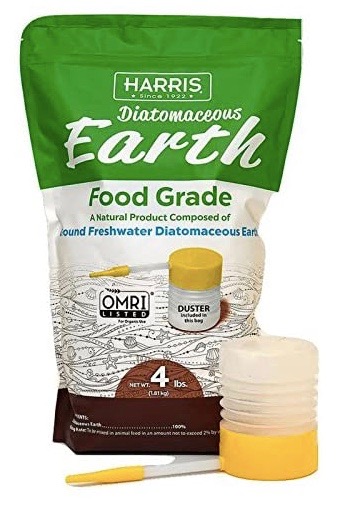
Make sure you get food-grade diatomaceous earth like this.
If you do decide to use diatomaceous earth, make sure you only get pure, food-grade diatomaceous earth (you can find it online here). Avoid the diatomaceous earth made for swimming pools. That type of diatomaceous earth can be toxic to both humans and animals. You want to only get diatomaceous earth that has less than 1% crystalline silica.
How to Use
For bed bugs, apply DE in between the mattresses, on the carpet, and on any soft materials you have in the room where the bugs can hide and lay eggs. Cover all cracks of hardwood floors and baseboards with DE as well. Also, sprinkle it in your closets.
Obtain a smooth metal container and put a coating of DE in the bottom of the container. Place it near the legs of your bed to kill bedbugs.
And how does diatomaceous earth work for controlling internal
parasites? Many people swear by it for cleansing the colon and
controlling internal parasites, as well as preventing cancer.
Add a heaping tablespoon to a glass of water or juice and take it up to
three times a day.
You can also use diatomaceous earth as a safe and natural insecticide to protect your plants from slugs, snails, mealybugs, aphids, and other pests. Sprinkle it directly onto plants affected by pests, including the undersides of the leaves. You can also mix it into the soil surrounding the plant to keep slugs and ants away.
Mix it into the soil as well. It will improve the structure of the soil and keep pests away that might otherwise live in the soil.
Learn More About Being Prepared
About the Author
My name is Sue Merriam, and I began the journey of self-reliant living more than three decades ago, which enabled me to stay home with my children. Fifteen years ago, I founded Joyful Homesteading to help others save money and face the future without fear. My goal is to give you practical, honest advice so you can save money and experience the joy of simple living. I hope you join me.
Recent Articles


-
Homesteading Legal Restrictions in HOA Communities
Aug 31, 26 05:48 PM
 Homesteading legal restrictions in HOA communities is possible, but check with your HOA and local laws.
 -
Solar Batteries for Emergency Backup During Outages at Home
Aug 19, 26 12:23 PM
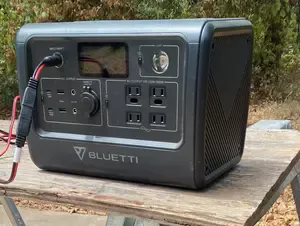 Learn what solar batteries can realistically power in an outage, how long they last, and what works best for you.
 -
Facts About Solar Panels
Aug 15, 26 10:30 PM
 Facts about solar panels are good to know when considering solar power for your off the grid homestead.